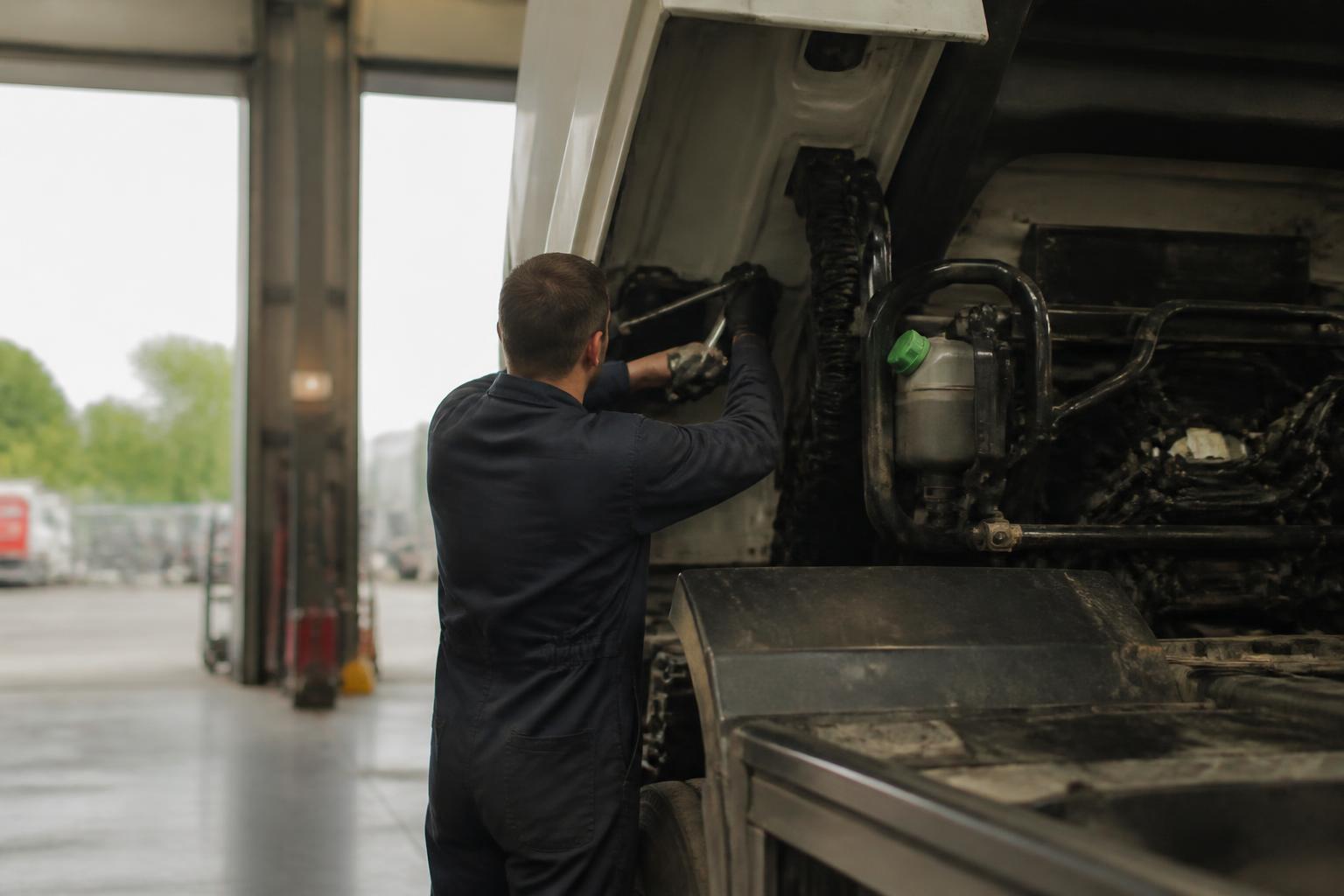

Vehicle off road planning for a haulage fleet is not just a diary of service dates. It is the job of deciding, in advance, when each vehicle and trailer will be unavailable, why, for how long, and what that absence does to the traffic plan. If that sounds basic, it is. The problem is that many fleets still treat it as three separate jobs: the workshop watches PMI dates, transport watches deliveries, and someone else remembers the MOT month when it gets close.
That split is where missed inspections, late bookings, rushed repairs and arguments over spare vehicles start. Good vehicle off road planning for a haulage fleet brings compliance dates, workshop capacity and operational demand into one plan. It tells you what must come off the road, what can wait, what needs parts ordered now, and which booking will cause the least damage to the week.
What vehicle off road planning actually needs to cover
In a UK haulage fleet, off road planning means scheduling every period when a vehicle or trailer is not available for traffic use, whether that is for compliance, repair, inspection, testing or accident work. It is wider than maintenance planning on its own.
At minimum, the plan needs to cover:
- PMI dates, based on the fleet’s declared inspection frequency
- MOT bookings and likely prep time before test
- safety inspection failures and follow-up repairs
- reported defects from daily walkarounds
- brake testing where required by your maintenance regime
- tachograph inspections and calibrations where due
- LOLER dates if you run equipment that needs it
- tyre work that will take a unit or trailer out of use
- manufacturer servicing if you still follow it alongside your compliance schedule
- unscheduled breakdown repairs
- accident damage
- campaign work or recalls
- substitute vehicle availability
For an O-licence holder, this is not just good housekeeping. It sits directly against roadworthiness, maintenance promises made in your licence application, and what the DVSA will expect to see if they inspect the operation. If your stated preventative maintenance inspection interval is six weeks, then the planning system needs to show how you keep to six weeks in real life, including holiday periods, peak traffic weeks and workshop closures.
That point matters in the UK because the operator carries the burden of proving effective maintenance control. A missed booking is not excused because the planner was busy or the workshop was full. If a vehicle should have had a PMI on Monday and instead stays out earning until Friday, that is a maintenance control failure first and an admin slip second.
A proper off road plan also needs asset detail, not just registration numbers. You need to know:
- unit or trailer number
- registration
- fleet type and use
- inspection frequency
- last PMI date
- next PMI due date
- MOT expiry
- current defects open
- whether parts are on order
- booked workshop or external provider
- estimated time off road
- whether a replacement asset is available
If trailers are planned separately from units, that has to be visible too. Many fleets are reasonably tidy on tractor units but weak on trailers, especially when trailer utilisation is shared across customers, depots or subcontracted work. That is often where a roadside prohibition starts.
Comparing paper diaries, spreadsheets and shared calendars
For a small fleet, simple methods can work. The problem is not that paper or spreadsheets are foolish. The problem is the point where they stop matching the complexity of the operation.
A paper wall planner or diary is usually where owner-drivers and very small fleets begin. It is quick. Anyone can understand it. You can mark PMI weeks, MOT months and holidays in ten minutes. For five vehicles with one person controlling bookings, that may be enough.
Where paper starts to fail is when dates move. A PMI booked for Wednesday slips to Friday because parts did not arrive. The trailer that should have gone in next week now has to wait. Someone rubs out one line, forgets to change another, and the transport office still thinks the vehicle is available. There is no audit trail. There is no automatic warning that the revised date now breaches your inspection interval. And if the diary is in one office, no one else sees the live picture.
Spreadsheets are usually the next step. They are better for sorting dates, filtering by depot, and seeing what is due in the next month. A decent spreadsheet can absolutely run a small fleet if one capable person owns it and updates it every day. It can also hold trailers, MOT expiry dates, brake test history and workshop notes in one place.
But spreadsheets fail in familiar ways:
- the wrong version gets emailed around
- one person understands the formulas and no one else does
- workshop bookings and traffic bookings sit in separate files
- colour coding replaces proper status control
- defect work is tracked in email or WhatsApp, not in the sheet
- there is no clean link between “due”, “booked”, “in workshop” and “completed”
Shared calendars sit somewhere between the two. Outlook or Google calendars can work better than people expect for a modest fleet. They are visible, easy to move around, and useful for seeing workshop bookings against transport demand. If you colour one calendar for PMI, one for MOT, and one for defects, you get a quick operational picture.
The weakness is structure. A calendar event does not naturally hold a maintenance history. It will not warn you that trailer T12 has had two brake-related defects since the last inspection. It will not tell you whether the PMI paperwork has been signed off, whether the inspection sheet is back, or whether the vehicle was released with advisories still open. It is a booking tool, not a maintenance control system.
For smaller fleets, the right question is not “Can we manage with a spreadsheet?” Usually you can, for a while. The real question is “At what point do we stop being sure?” Once you have enough units, trailers, external workshop bookings and moving traffic demand that dates are being checked from memory, your system is already too weak.
Comparing workshop-led systems with transport-led systems
This is where many fleets make the wrong comparison. They think the choice is between software A and software B. In practice, the bigger difference is whether the planning starts from workshop capacity or from transport demand.
A transport-led system starts with vehicle availability. The traffic office looks at when units are needed, then tries to fit maintenance around the work. That feels practical because the operation comes first. If customer demand is heavy on Tuesday and lighter on Friday, the maintenance booking gets pushed to Friday.
The trouble is that this method slowly turns every planned event into a negotiation. The workshop becomes a service department to transport, rather than the control point for roadworthiness. The unit that should come in this week stays out because “it’s only a day or two”. Prep time before MOT gets squeezed. Defects are tolerated until a more convenient slot appears. Nothing looks disastrous on any single day, but the whole regime drifts.
A workshop-led system starts from what must be done and when capacity exists to do it properly. PMI intervals are fixed first. MOT prep and test bookings are built around those dates. Defect work is assessed against safety and legal risk, not just traffic pressure. Transport then plans around known unavailability, instead of pretending every asset will always be there until the workshop complains.
That does not mean the workshop wins every argument. It means the plan is built from the hard dates outward. If a vehicle needs a preventative maintenance inspection next week, the booking is protected. If a trailer has a brake issue, it is not left in service because a load needs covering. The transport team can still choose whether to swap units, hire in, move work, or use a spare. But they are making those choices early, not at 5pm the day before.
This matters even more when the workshop is external. If you rely on outside maintenance providers, you do not control their ramp space. A transport-led mindset often assumes a slot will be found when needed. A workshop-led mindset knows that if you do not reserve workshop time, someone else will take it.
Fleets that perform well under DVSA scrutiny usually have one common feature here: the maintenance plan is real enough to inconvenience operations. If every inspection date can be moved whenever traffic gets busy, it is not really a plan at all.
How to compare reactive booking against forward maintenance planning
Reactive booking means you arrange work when it becomes due, or when a defect appears serious enough that it cannot wait. Forward planning means you reserve slots weeks or months ahead, then adjust around them as needed.
Reactive booking looks flexible. For a very small fleet with local workshop access and spare capacity, it can work for a while. If your workshop can usually fit you in, and your vehicles do stable work, you may get away with ringing up when the PMI is approaching.
The weakness is that reactive booking assumes capacity will be there at the exact moment you need it. Often it is not. MOT stations fill up. External workshops get blocked with breakdowns. Parts for common repair items are not always on the shelf. One failed inspection turns into two extra days off road, and now the next booking is affected as well.
Forward maintenance planning is less comfortable because it forces decisions early. You have to block out vehicle time before there is an obvious problem. You have to reserve workshop space before the transport week is fully known. You may have to book an MOT test and the prep slot around it well in advance.
In practice, that is usually the better trade. You can always release a reserved slot if circumstances change. It is much harder to create capacity at the last minute when several vehicles are due together.
A sensible comparison looks like this:
Reactive booking may suit:
- very small fleets
- operations with genuine spare vehicles
- local work with low disruption from downtime
- direct access to a workshop that knows the fleet well
Forward planning is usually needed where you have:
- more than a handful of vehicles
- multiple trailers per unit
- time-sensitive traffic work
- limited spare assets
- external workshop dependence
- previous issues with missed PMI dates or rushed MOT prep
- concern about OCRS or maintenance record scrutiny
There is also a human point. Reactive systems depend heavily on one person remembering what is coming. Forward planning puts the memory into the schedule itself.
What a workable plan looks like for PMI, MOT and defects
A workable plan is not clever. It is complete, visible and updated. It should tell the transport office, the workshop and the O-licence holder the same story.
For PMI, each asset should have a future schedule built from the last completed inspection date and the required interval. Not “roughly every six weeks”. An actual due date. The booking should be made before the due date becomes urgent, and the plan should show whether the asset is:
- due soon
- booked
- in workshop
- inspected
- awaiting repair
- completed and returned
If the inspection reveals defects, the plan must show whether they are safety critical, whether the vehicle is off road, and what is needed for release. This is where many fleets lose control. The PMI is recorded as done, but the repairs sit separately and no one has one view of whether the asset is genuinely fit for service.
For MOT, the plan needs more than the test date. It needs:
- the expiry date
- the prep booking
- the test booking
- contingency for failure items
- a clear owner for taking and collecting the vehicle
Booking the test without booking prep is how vehicles arrive at MOT with obvious faults that should have been caught earlier. If the same workshop handles both, fine. If prep and test are separate, both appointments need to be locked in.
For defects, the key is speed and classification. Daily walkaround reports need to feed into the off road plan quickly enough that the right person can decide whether the vehicle stays out, comes in tonight, or is taken off the road now. If defect reporting is weak, planning will always be weak because the fleet picture is false. This is why clean reporting matters, especially for items drivers are tempted to ignore. Fleets that tighten this up usually see fewer nasty surprises later on. The basics are covered well in this guide to daily walkaround defects worth reporting immediately.
The paperwork matters too. If you are ever asked to demonstrate maintenance control, you need to show more than bookings. You need evidence of what was inspected, what was found, what was repaired, and when the vehicle returned to service. Good records of PMI inspections with photo evidence make that much easier than trying to reconstruct events from job cards and phone calls.
How to choose the right approach for a five to hundred vehicle fleet
Between five and a hundred vehicles, there is no single perfect method. But there are clear signs that one approach is too light for the risk you carry.
At around five vehicles, a disciplined spreadsheet or shared calendar may still be enough, especially if:
- one person controls all bookings
- trailer numbers are low
- the workshop arrangement is stable
- spare capacity exists
- the operator can personally check every due date
Even then, the danger is key-person dependence. If the transport manager is away for a week, can someone else see every upcoming PMI, MOT and open defect without asking questions?
By ten to twenty vehicles, with trailers in the mix, simple tools start to strain. You now have enough moving parts that workshop time, traffic demand and compliance dates will clash regularly. If inspections are still being planned from memory or from a wall chart, you are exposed. This is often the point where a dedicated maintenance and compliance system earns its keep, not because it is fashionable, but because it reduces uncertainty. A system built around workshop reality, such as Operator Compliance Software, is useful here because it starts from maintenance control rather than just vehicle lists.
From twenty to fifty vehicles, trailer planning usually becomes the deciding factor. A fleet may think it has resilience because there are enough units, but trailer downtime can still wreck the week. If trailer PMIs, brake work, MOT prep and damage repairs are not planned with the same discipline as units, the operation develops blind spots.
From fifty to a hundred vehicles, the issue is less about whether software is needed and more about whether the planning logic is right. Plenty of fleets this size still struggle because transport, workshop and compliance are each looking at different screens. If the person answerable to the Traffic Commissioner cannot get a straight answer to “Which vehicles are due, booked late, waiting repair, or off road today?” then the setup is weak regardless of how modern it looks.
Workshop access changes the answer as well. An own workshop gives control, but only if the capacity plan is honest. External workshop reliance demands earlier booking and better follow-up. Mixed models need both. And O-licence risk should be judged plainly. If your maintenance history is already under pressure, if OCRS is a concern, or if you have had issues with missed inspections, then the right approach is the one that gives you the clearest evidence and the least room for guesswork.
That is really the comparison that matters. Not paper versus software in the abstract, and not old-fashioned versus modern. Just this: can your current way of planning keep every vehicle and trailer compliant, available when expected, and properly controlled when things go wrong? If the answer is “usually”, the system is already telling you it is not enough.