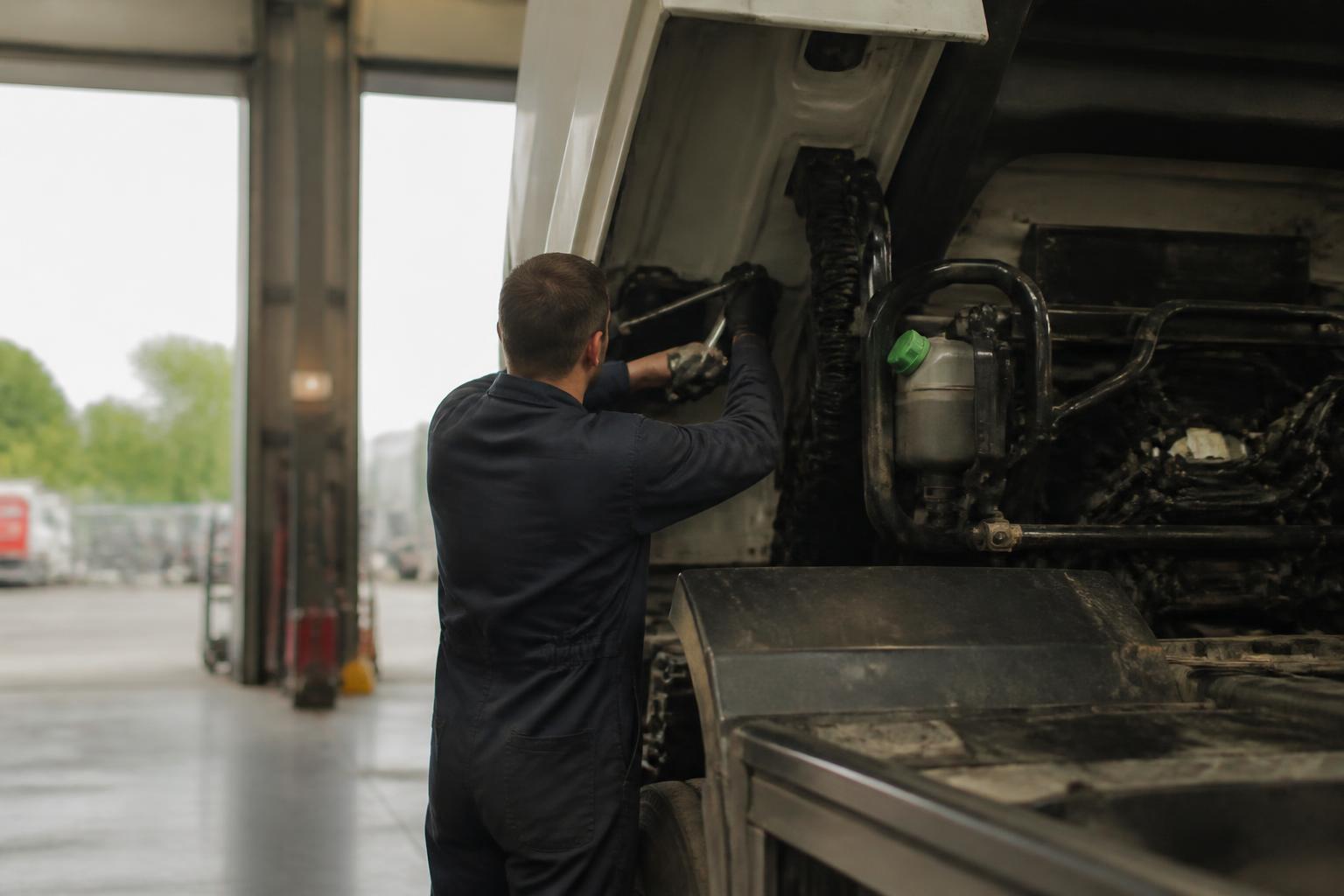

If you hold a restricted O-licence, you do not need a transport manager in the same way a standard national or international operator does. That catches people out. The lack of a formal transport manager requirement does not reduce your duty to keep vehicles fit and serviceable. You still have to show proper control of maintenance, defects, inspections and repairs. If DVSA stop one of your vehicles, or if the Traffic Commissioner asks questions later, “the garage looks after that” is not a defence.
For a small or mid-sized fleet, maintenance control is mostly about proof. Proof that each vehicle had its PMI at the right interval. Proof that defects were reported and dealt with. Proof that MOT dates, brake tests, tachograph inspections and repair records were known, booked and filed. The hard part is not understanding that in theory. The hard part is keeping hold of it when the person who “knows where everything is” is off, a workshop misses a sheet, or a vehicle quietly drifts two weeks over its inspection date.
What maintenance control means on a restricted O-licence
On a restricted O-licence, maintenance control means having an actual system for keeping every authorised vehicle in a roadworthy condition, and being able to demonstrate that system works. It is not just arranging repairs when something breaks.
The licence holder remains responsible for roadworthiness at all times. That includes when maintenance is carried out by an external workshop, dealer, mobile fitter or tyre company. You can contract out the work. You cannot contract out the responsibility.
In practice, maintenance control for a restricted operator licence fleet usually comes down to six things.
First, a clear preventative maintenance inspection schedule. Each vehicle needs a set inspection frequency that matches its use, age, mileage, load, operating conditions and manufacturer guidance. The interval has to be sensible and it has to be kept. If your maintenance planner says six weekly PMI, that means six weekly PMI, not “around every month and a half if the workshop has space”.
Second, proper daily defect reporting. Drivers, yard staff or whoever uses the vehicle must check it and report defects. Those reports need to be reviewed and acted on. Nil defect reporting matters too. If there is no paper or digital trail showing checks happened, it is difficult to prove your system is real.
Third, repairs must be controlled. That means defects are assessed, safety critical items are dealt with before the vehicle goes back out, and the repair record links back to the defect or inspection that found the issue.
Fourth, records have to be retained and retrievable. PMI sheets, brake test results, MOT certificates, tachograph calibration records, job cards, invoices, defect reports and any associated sign-off need to be easy to find. If you want a blunt summary of what inspectors look for, our guide to what DVSA checks in maintenance records sets it out plainly.
Fifth, someone has to monitor due dates. Not just PMI. Also MOT, tachograph, brake testing where applicable, safety inspections, and any follow-up work raised but not yet completed.
Sixth, the system must survive normal business disruption. Holidays, staff changes, workshop delays, agency drivers and vehicle swaps should not break it.
That is the point many restricted operators underestimate. The legal position in the UK is not “did you mean well?” It is “were the vehicles roadworthy, and can you show how you controlled that?” If the answer is weak, OCRS, prohibitions and licence action can follow.
Spreadsheets, wall planners and diaries - compare manual methods and show where they work, where they fail and what usually gets missed
Manual systems are common because they are cheap, familiar and quick to start. A spreadsheet can be built in an hour. A wall planner can be read from across the office. A diary works when one person books everything and never misses a page.
There is nothing inherently non-compliant about manual control. For a very small fleet, it can work well enough if one organised person owns it properly.
A simple spreadsheet usually covers vehicle registration, unit number, PMI interval, last inspection date, next due date, MOT due date and workshop booking status. A wall planner helps with visibility. Diaries are often used for booking reminders and follow-up calls. Some operators also keep a vehicle file, paper or digital, with PMI sheets, defect reports and invoices behind dividers.
This works best when the fleet is small, the vehicles are similar, the operating pattern is predictable and one person checks the records every week. Five vehicles on fixed local work, all using the same workshop, is a different job from forty mixed vehicles running hard with trailers, hire units and frequent rescheduling.
Where manual systems fail is not usually the main date. It is the surrounding detail.
PMI dates get moved but the planner does not. A vehicle goes in late because the workshop is full, and nobody recalculates the next due date from the actual inspection date. A defect sheet is handed in, the repair is done, but the original report never gets filed. A brake test printout stays in the workshop office. An MOT pass is known about but the certificate is not copied into the vehicle file. A vehicle off the road for bodywork quietly misses its planned inspection because everyone assumes “it is not being used anyway”.
Spreadsheets also depend heavily on data discipline. One wrong cell, one sorted column, one copied formula, and dates move without anyone noticing. Shared spreadsheets become worse when several people update them. Wall planners are clear until somebody rubs out the wrong line or forgets to transfer next month’s bookings. Diaries are personal by nature. If the diary owner leaves, so does the system.
Another common gap is evidence of review. Many manual systems hold dates but not decisions. If a PMI found defects, who checked they were rectified before the vehicle returned to service? If a vehicle ran late because parts were unavailable, who signed off the interim decision? If a nil defect report was not submitted, who chased it? Manual methods can do this, but only if someone is very deliberate about it.
The records problem is worse than the planning problem. We often see operators who know roughly when inspections happened, but cannot lay hands on the actual paperwork quickly. That is fine until it is not. When inspection records go missing, the risk does not sit with the garage, it sits with the licence holder. We covered that in more detail here, when inspection records go missing, the risk lands on you.
Using an external workshop to stay in control
Most restricted operators do not run their own HGV workshop. That is normal. You may use a local independent, a dealer, a specialist trailer workshop, or a mix of providers. Done properly, that can work very well.
The key is to separate who does the work from who controls the system.
An external workshop can carry out PMI, repairs, MOT preparation, brake testing and defect rectification. They may also send reminders and keep copies of service sheets. Useful, but not enough on its own. You still need your own view of what is due, what has been completed, what is overdue and where the records sit.
At minimum, agree the following with any workshop you rely on.
Set the inspection frequency in writing. Do not leave it as “book us in every so often”. State whether each vehicle is on six weekly, eight weekly or another interval, and who is responsible for initiating bookings.
Agree what a completed PMI pack includes. Usually that means the inspection sheet, brake performance evidence where relevant, details of defects found, rectification notes, and sign-off. If the workshop uses digital inspection sheets, make sure you receive them in a form you can store and retrieve.
Be clear on unroadworthy findings. If a serious defect is found, the workshop needs authority and a route to contact the right person immediately. There should be no ambiguity about whether the vehicle can return to service.
Require prompt return of documents. Not “when accounts are done”. Not “with the monthly invoice run”. Promptly. The longer records sit outside your control, the more likely they are to go missing.
Track outstanding work separately from completed PMI. A vehicle can have an inspection done and still be waiting on parts. That needs active control. The inspection date alone does not prove the vehicle was fit to use afterwards.
Keep your own master planner. Even if the workshop sends reminders, keep your own due dates. Workshops are busy. They may be excellent, but their diary is not your compliance system.
This is where restricted operators sometimes get lulled into a false sense of security. A good workshop feels like control because the vehicles are looked after by competent people. But workshop competence and operator compliance are not the same thing. If your vehicle is stopped and a defect is found, or if your records are reviewed after an incident, the question comes back to your system.
We built our compliance tools from that workshop reality. The point was never to replace a good workshop. It was to give the operator a way to stay in charge of dates, defects and documents while the workshop gets on with the maintenance work.
What software should actually do for a small fleet
Software for a small fleet should not try to imitate an enterprise system. It should do the boring control work reliably, and it should make missing evidence harder.
Compared with spreadsheets and paper planners, software-based control is better at three things. Date discipline, document retention and follow-up.
Date discipline means the system calculates and shows what is due, what is booked, what is completed and what is overdue. It should cope with actual inspection dates moving, not just planned dates. It should also deal with mixed assets, because many fleets are not just one type of rigid on one simple interval. If you run mixed vehicles, our notes on a preventative maintenance schedule for mixed HGV fleets may help frame the planning side.
For PMI control, useful software should let you set inspection intervals by vehicle, record the completed inspection date, attach the inspection sheet, flag defects raised and show whether those defects were rectified. If it cannot show the chain from planned inspection to completed inspection to rectification evidence, it is not doing enough.
For defects, the basics matter more than fancy screens. You need a clear record of what was reported, by whom, when, the severity, what action was taken, and whether the vehicle was kept in service or stood down. Nil defect reporting should be easy to capture too. If drivers hate the system, they will bypass it.
For document records, the software should store files against the right vehicle and asset type, and make them easy to retrieve. MOT certificates, brake test reports, tachograph calibration certificates, service sheets, job cards and invoices should not live in six inboxes and a shared drive called “fleet stuff”. Search matters. So does version control. So does knowing that the latest document is attached to the correct registration.
Alerts are useful, but only if they are specific and trusted. “Vehicle due soon” is weak. “AB12 CDE PMI due on 14 May, not booked” is useful. Good systems tell you what needs doing and let you prove it was done.
For a small fleet, the best software also fits workshop reality. Vehicles miss bookings. Parts do not turn up. Inspections uncover extra work. A clean demo system often falls apart there. We have written before about why good fleet software breaks down in a busy workshop, because the real world is where control systems are tested.
If you are comparing options, look for plain things.
Can it show all upcoming PMI, MOT and tachograph dates in one place?
Can it hold defect reports and link them to rectification?
Can it store records in a way that survives staff changes?
Can an office person and a workshop person both use it without a training course?
Can you export records quickly if DVSA ask?
Can it show what is outstanding right now, not just what happened last month?
That is the level that matters. Not dashboards for the boardroom. Not language about optimisation. Just control.
If you want a practical example of software built around that job, our operator compliance software for maintenance and records control is designed around the way fleets and workshops actually work.
Choosing the right level of control for five to a hundred vehicles
There is no single right method for every restricted fleet. The right level of control depends on fleet size, complexity, internal capacity and how exposed you are if something slips.
At around five vehicles, a manual system can still work. That is especially true if the fleet is stable, one person owns the process, and your workshop returns complete records quickly. Even then, the system needs discipline. A spreadsheet for dates, a fixed weekly review, and a proper digital filing structure are the minimum. If your paperwork already goes astray, manual control is probably not enough even at this size.
At ten to twenty vehicles, the cracks usually start to show. More bookings move. More defects are reported. More documents arrive from different places. Holiday cover becomes a real issue. This is often the point where operators think they have a workshop problem, when they actually have a control problem. If you rely on memory, inbox searches and paper folders by this stage, you are one missed PMI away from trouble.
From twenty to fifty vehicles, software stops being a nice idea and becomes the safer option. Not because the law changes at that number, but because volume does. There are simply too many dates, reports and records for one person to hold together manually without regular failures. If you also use several maintenance providers, hire vehicles, trailers or mixed operating patterns, the need comes sooner.
Above that, the main issue is consistency. Different depots, different drivers, different workshops and different admin habits create gaps. The challenge is not only planning inspections. It is making sure every defect, every PMI sheet and every follow-up action ends up in one controlled record.
Internal capacity matters as much as fleet size. We know fleets of twelve that need software because nobody has spare time to chase paperwork. We also know small family operations that keep six vehicles under tight manual control because one person is meticulous and never lets the records drift. What matters is whether the system survives pressure.
Compliance risk matters too. If your vehicles run long distances, carry heavier loads, work in tougher conditions or already attract roadside attention, weak control costs more. OCRS does not care that your planner was on holiday. Nor will the Traffic Commissioner if the inspection history is patchy.
A good rule is this. If you cannot answer these questions immediately, your control is probably too loose.
When is each vehicle next due for PMI?
Which vehicles have outstanding defects?
Can you produce the last inspection record for any registration within a minute or two?
Do you know which documents are still missing from the last month?
If the person who manages the diary is off tomorrow, does the system still function?
That is what maintenance control looks like in practice for a restricted operator licence fleet. Not a policy in a binder. Not a promise from a workshop. A working method that keeps vehicles roadworthy, keeps dates visible, and keeps evidence where you can reach it.
For some fleets that will still be a disciplined manual setup. For many between five and a hundred vehicles, it will be software backed by a good workshop and a clear owner inside the business. The important part is being honest about which stage you are at. If you are already spending too much time chasing sheets, checking dates twice and hoping nothing is missing, you do not have control. You have a warning.
Does a restricted O-licence mean lighter maintenance duties?
No. A restricted O-licence changes what the operator is allowed to carry, not the need to keep vehicles fit and serviceable. The operator remains responsible for roadworthiness and proper maintenance arrangements.
Can I rely on my garage to manage all maintenance dates?
You can ask a garage to help, but the operator still needs control. If a PMI is missed or records are incomplete, DVSA and the Traffic Commissioner will look to the licence holder.
Are spreadsheets enough for a small fleet?
Sometimes. For a handful of vehicles with one person watching every date, they can work. Problems start when vehicles increase, defects come in from different drivers, or paperwork sits in too many places.
What records should be easy to produce?
You should be able to show planned maintenance dates, completed PMI records, defect reporting, repair history, MOT status and evidence that safety-related work was followed up properly.
When is software worth it for a restricted fleet?
Usually when the fleet is too big for one person to hold in their head. If jobs are being chased by phone, dates are missed, or paperwork is hard to find, software starts paying for itself.