
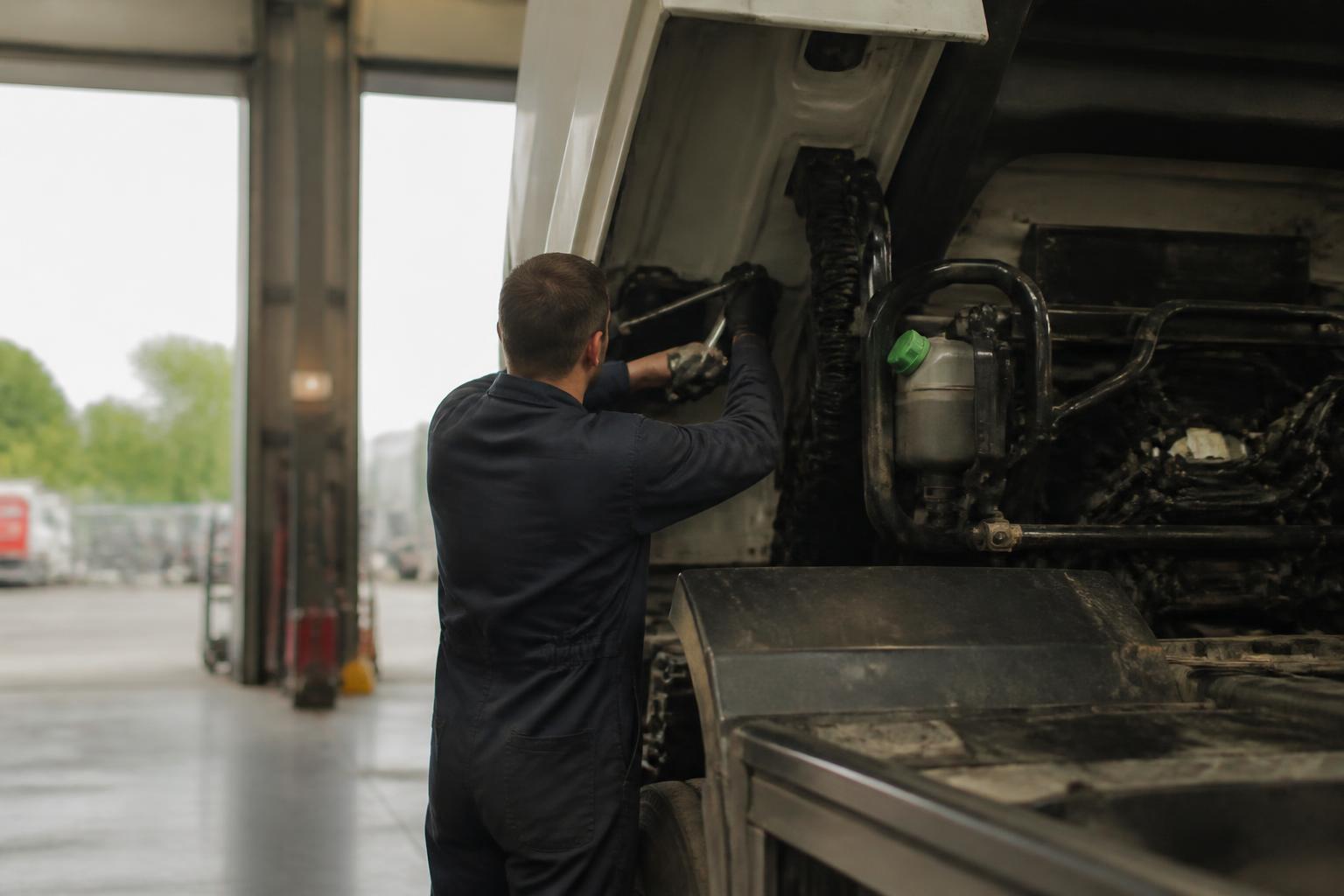
If DVSA asks whether a defect was repaired on time, the answer is not a promise, and it is not a note saying “done”. It is a chain of evidence. We need to show when the defect was found, how serious it was, who decided whether the vehicle could still be used, what work was done, when that work was completed, and when the vehicle was allowed back into service.
That matters because DVSA is not only checking whether a repair happened at some point. It is checking control. If a safety defect was reported at 06:30 and the vehicle still went out at 07:00, the problem is not just the defect. The problem is that the operator used a vehicle without protecting roadworthiness. If we can show the report, the stand-down, the workshop job, the parts fitted, the sign-off and the release time, we can defend the decision properly.
What DVSA is trying to see when it checks your defect records
An examiner or auditor is trying to answer a small number of practical questions.
Was the defect identified?
Was it assessed correctly?
Was the vehicle kept legal and safe while the defect existed?
Was the repair completed in a timescale that matched the risk?
Was there proper management control, rather than guesswork after the event?
That is what sits behind most maintenance record checks. If you have read our piece on what DVSA checks in maintenance records, this is the same principle applied specifically to defects and repair timing.
Timing matters because some defects are not equal. A blown marker lamp and a brake chamber leak do not carry the same risk. DVSA knows that. So does the Traffic Commissioner. They are not expecting every defect to be fixed within the same number of hours. They are expecting the operator to show sensible judgement, backed by records.
Roadworthiness matters because the legal issue is not only whether the workshop was busy or whether the part arrived late. The issue is whether the vehicle was used in a condition that should have kept it off the road, or whether use was restricted in a way that was actually safe and lawful. A defect can move from minor to prohibiting depending on what it affects and how the vehicle is operated.
Control matters because a defect system is part of your O-licence undertakings. A defect report that disappears into a tray, a fitter who “sorted it sometime yesterday”, or a transport office that cannot show who released the vehicle, all suggest weak control. Weak control affects how DVSA sees your maintenance regime as a whole. It can feed into OCRS. In the worst cases, it becomes part of the picture put before the Traffic Commissioner.
In the UK, this is judged against the operator licensing and roadworthiness framework used by DVSA and the Traffic Commissioner. If you run internationally, do not assume a general EU view will save a weak UK paper trail. Your UK records still need to show clear control over defect reporting, repair and vehicle use.
The records that show a defect was repaired on time
The minimum evidence chain is simple. In practice, many operators break it in the middle.
You need:
- The driver defect report.
- The assessment of severity.
- The instruction or authorisation to repair.
- The workshop job record.
- Any parts evidence if parts were needed.
- The completion record with date and time.
- The release back to service.
The driver report should identify the vehicle or trailer, date, time, location if relevant, and the defect described in plain language. “Nearside rear brake issue” is weak. “NS rear brake chamber leaking air on application” is much better. If the defect was found during a daily walkaround, the report should tie back to that check. If you want to tighten the quality of first reports, our article on daily walkaround defects worth reporting immediately covers the sort of wording that helps.
The assessment of severity is where many files go thin. Someone needs to decide whether the vehicle is fit to continue, fit only with restriction, or unfit until repaired. That decision should be recorded, along with who made it. If the defect affects steering, brakes, tyres, wheel security, major air leaks, suspension integrity, visibility, or anything else that clearly touches roadworthiness, the record should show that the vehicle was stood down unless there was a lawful and safe basis for limited movement, such as movement to a workshop.
The repair authorisation can be formal or built into your defect system, but it needs to exist. If the workshop receives the instruction verbally and nothing records it, you have a gap. The same applies if the transport office says “booked in with garage” but there is no job card, no booking confirmation and no record of what the garage was asked to fix.
The workshop job record is the core repair evidence. It should show the complaint, diagnosis, work carried out, fitter name or identifier, and the date and time work was completed. If the work spans shifts or days, the record should show that. If the vehicle was waiting on parts, the record should show that too.
Parts evidence helps prove timing. This can be a parts issue note, stock movement, supplier invoice, delivery note, or workshop system entry. It is not always essential for a straightforward adjustment or electrical repair, but when the repair depends on replacing a component, parts records strengthen the file. If you say the brake chamber was changed at 10:15 but the chamber was not booked out or delivered until 14:40, expect questions.
The completion record must say more than “done”. It should say what was repaired, by whom, and when it was finished. If a check or test was required after repair, record that too. Brake defects should not close with a vague note. Lamp defects should state which lamp and that operation was confirmed. Air leaks should state leak rectified and system checked.
Finally, return to service needs its own moment. Someone authorises the vehicle back onto work. That might be the workshop controller, fleet engineer or transport manager, depending on your setup. But it should be visible in the record.
How to prove the vehicle was not used before the repair was done
If the defect affected roadworthiness, you need to show that the vehicle did not continue in normal use before repair completion.
The strongest evidence is a stand-down record in your maintenance or fleet system. That record should show the time the vehicle was marked VOR or otherwise unavailable, the reason, and the time it was released. If you are using software for this, the value is not the screen itself. It is the timestamp and the audit trail. We built vehicle off road planning for haulage fleets around this exact problem, because whiteboards and phone calls do not leave much to defend later.
You can also support the stand-down with operational records:
- Job allocation records showing the vehicle was removed from work.
- Driver debrief or key control records.
- Yard movement notes.
- tachograph activity showing no driving after the defect report.
- Trailer allocation records showing a trailer was swapped out.
- Workshop booking and arrival times.
If the vehicle was restricted rather than fully stood down, the restriction must be specific. “Driver aware” is not a restriction. “Vehicle moved empty from customer site to workshop under instruction after lamp defect identified” is. “Trailer parked pending tyre replacement, not loaded” is. The file needs to show who made that decision and why it did not compromise roadworthiness.
tachograph data is useful but not enough on its own. It can show that a unit did or did not move after a defect was reported. That helps. But it does not explain why it moved, whether the movement was authorised, or whether the defect allowed limited movement. Use it as supporting evidence, not as the whole case.
The same applies to workshop CCTV or gate logs. Helpful, but secondary. DVSA will still want the defect and repair records to make sense on their own.
A common weak spot is defects reported out of hours. The driver sends a message, the office sees it next morning, and the vehicle has already been used. If you operate early starts, your process must deal with that. There needs to be a live defect hold that stops allocation until the defect has been assessed and cleared.
What good defect evidence looks like in real workshop use
Here is what a complete record looks like for a common HGV defect.
Example 1, brake air leak.
Driver report, 05:55: “Unit AB12 CDE. Air leak from offside rear brake chamber when foot brake applied. Heard during walkaround. Vehicle not taken out.”
Assessment, 06:02: “Possible brake defect affecting roadworthiness. Vehicle stood down. Transport notified. Authorised by TM initials.”
Workshop job, opened 06:18: “Investigate air leak OS rear drive axle. Found brake chamber diaphragm leaking. Chamber replaced. Air system tested. No leak on application. Brake operation checked.”
Parts record, 07:01: “1 x brake chamber issued from stock.”
Completion, 07:32: “Repair complete. Tested in yard. Fitter ID 27.”
Return to service, 07:40: “Released by workshop controller.”
That is defensible. It shows report, decision, repair, part, completion and release.
Now compare that with a weak version:
Driver sheet: “Air leak.”
Workshop note: “Fixed brake.”
No time, no stand-down, no part, no release. If the vehicle was stopped roadside later that week, you would struggle to prove anything.
Example 2, tyre cord exposed on trailer.
Good record: Driver report identifies trailer number and wheel position. Transport marks trailer unserviceable at 16:10. Trailer allocation shows swap to another trailer. Tyre supplier work sheet shows replacement at 18:05. Invoice or fitter sheet identifies the wheel position. Trailer released next morning after visual check.
That satisfies DVSA because the trailer was controlled and the records line up.
Weak record: “Trailer tyre replaced Thursday.” No defect report. No trailer number on invoice. No evidence the trailer was parked before replacement.
That leaves too much room for challenge.
Example 3, headlamp inoperative.
This is where proportion matters. If a lamp failed in daylight and the vehicle returned to base safely with a clear assessment and repair before the next night shift, that can be reasonable. But the record still needs to show the decision. A complete note might say: “Dip beam NS failed at 14:20. Vehicle on local day work only, returned direct to yard, no further use authorised after dusk. Bulb replaced 16:05. Lamp operation checked.”
That shows judgement and control. Without the restriction note, it just looks as though the vehicle was used with a defect.
One thing that improves files quickly is better root cause notes. If a defect keeps returning, DVSA will notice the pattern. We see this with lighting faults, ABS leads, and trailer suzies. Our article on reducing repeat defects through better root cause notes goes into the workshop side of that.
The mistakes that make on-time repairs hard to defend
The first mistake is vague wording.
“Fixed.” “Repaired.” “Checked.” “Driver defect sorted.”
None of that tells DVSA what happened. It also makes internal review nearly impossible.
The second is missing times. Dates alone are often not enough. If a defect is reported and repaired on the same day, the question is whether the vehicle was used in between. Without times, you cannot prove the order of events.
The third is no severity decision. Not every defect needs a long essay, but safety-related defects need a clear stand-down or restriction decision. If that is absent, it looks as though nobody took ownership.
The fourth is backfilled paperwork. This shows up more often than people think. Identical handwriting across several days. Job cards written in one block. Parts fitted before they were booked out. Driver reports completed after the workshop job. Once the file looks reconstructed, everything in it is weaker.
The fifth is relying on invoices alone. A garage invoice proves that someone billed for work. It does not always prove when the defect was reported, when the vehicle was stood down, or when the repair was completed. If you outsource repairs, you still need your own control record around the external work.
The sixth is not linking the records together. Driver report on one system. workshop sheet in a folder. parts on supplier email. release by text message. It may all exist, but if nobody can pull it together quickly, it is not much use in an audit. The same problem comes up when inspection files are incomplete, which is why when inspection records go missing, the risk lands on you resonates with so many operators.
How to build a defect process that stands up under audit
Start with one rule. A defect is not closed when someone says it is done. It is closed when the record shows report, decision, repair and release.
For operators running five to a hundred vehicles, the process does not need to be complicated. It does need discipline.
Set a standard for driver reporting. Vehicle or trailer ID. Date and time. Clear description. Safety critical or not if obvious. No one-word reports unless the system forces follow-up detail.
Make one person or role responsible for triage. Usually that is the transport manager, workshop controller or fleet engineer. That person decides whether the vehicle is fit, restricted or stood down. Record the decision at once.
Open a job as soon as the defect is accepted. If the work is outsourced, open an internal record anyway. Note where the vehicle is going, who is doing the work, and when the booking was made.
Require fitters to write what they found and what they did. Not a novel. Just enough that another competent person can understand the fault and the repair. If parts are fitted, tie them to the job.
Record completion time properly. Then record release separately. Those are not always the same thing. A repair may finish at 17:30 and the vehicle may be released at 18:00 after a check, paperwork review or trailer swap.
Use exception reporting. Any defect with no completion. Any stood-down vehicle with no release. Any driver-reported safety defect where tachograph data shows movement before clearance. Those are the jobs to chase the same day, not at audit time.
Keep workshop and compliance records joined up. This is one reason we built operator compliance software for maintenance records and defect control. Running a real HGV workshop at Woolpit Truck Repairs taught us that the hard part is not entering a defect. It is preserving the evidence chain when the yard is busy, the phone is going, and three vehicles need decisions at once.
Finally, test your own files the way DVSA would. Pick ten recent defects. Ask:
- Can we see when each was reported?
- Can we tell whether roadworthiness was affected?
- Can we show the vehicle was controlled until repair?
- Can we see what work was done?
- Can we prove when it was released?
If the answer is no on any of those, the process needs tightening.
When people ask how to show DVSA defects were repaired on time, the honest answer is that you do not prove it with one document. You prove it with a sequence that makes sense and survives scrutiny. If the report, stand-down, workshop action and release all line up, you are in a strong position. If you have to reconstruct the story afterwards, you are already defending from behind.
What counts as proof that a defect was repaired on time?
A dated defect report, a dated repair record, who did the work, what was done, and evidence the vehicle was not used unfit in between. The full timeline matters.
Do I need a driver defect report every day?
You need a proper daily walkaround check record and a way to record defects found. If no defects are found, your system should still show the check happened.
Can a vehicle be used before the defect is repaired?
Not if the defect affects roadworthiness. If the vehicle is unroadworthy, it must not be used until repaired. That is the point DVSA will focus on first.
Is a workshop invoice enough on its own?
Usually not. An invoice may show work was billed, but it often does not show when the defect was reported, whether the vehicle was stood down, or when it returned to service.
What if the repair was delayed waiting for parts?
You need to show the vehicle was controlled properly while waiting. If it was off the road, record that clearly. If it stayed in use, you must be able to justify that it remained roadworthy.