Good fleet software does not usually fail because the calendar, planner or defect list is technically broken. It fails because the workshop is busy, the process is messy, and the system cannot keep up with how commercial vehicles are actually maintained. On a quiet afternoon, almost anything looks workable. On a wet Monday with three drivers waiting, a missed PMI, a brake issue that has just come in, and a parts delivery that is late, weak software gets found out quickly.
That is the real answer to why fleet software fails in a busy workshop. The problem is not just software. It is software that was never built around booking-in, workshop control, compliance evidence and the constant interruption that comes with keeping vehicles roadworthy. If the system adds clicks, hides status, or forces staff to record the same thing twice, people stop trusting it. Then the records split. Then the risk starts.
The software is not failing on a quiet day
A software demo is controlled. The data is clean. The jobs are already in the system. The parts are available. The user doing the demo knows exactly where to click. Real workshops are nothing like that.
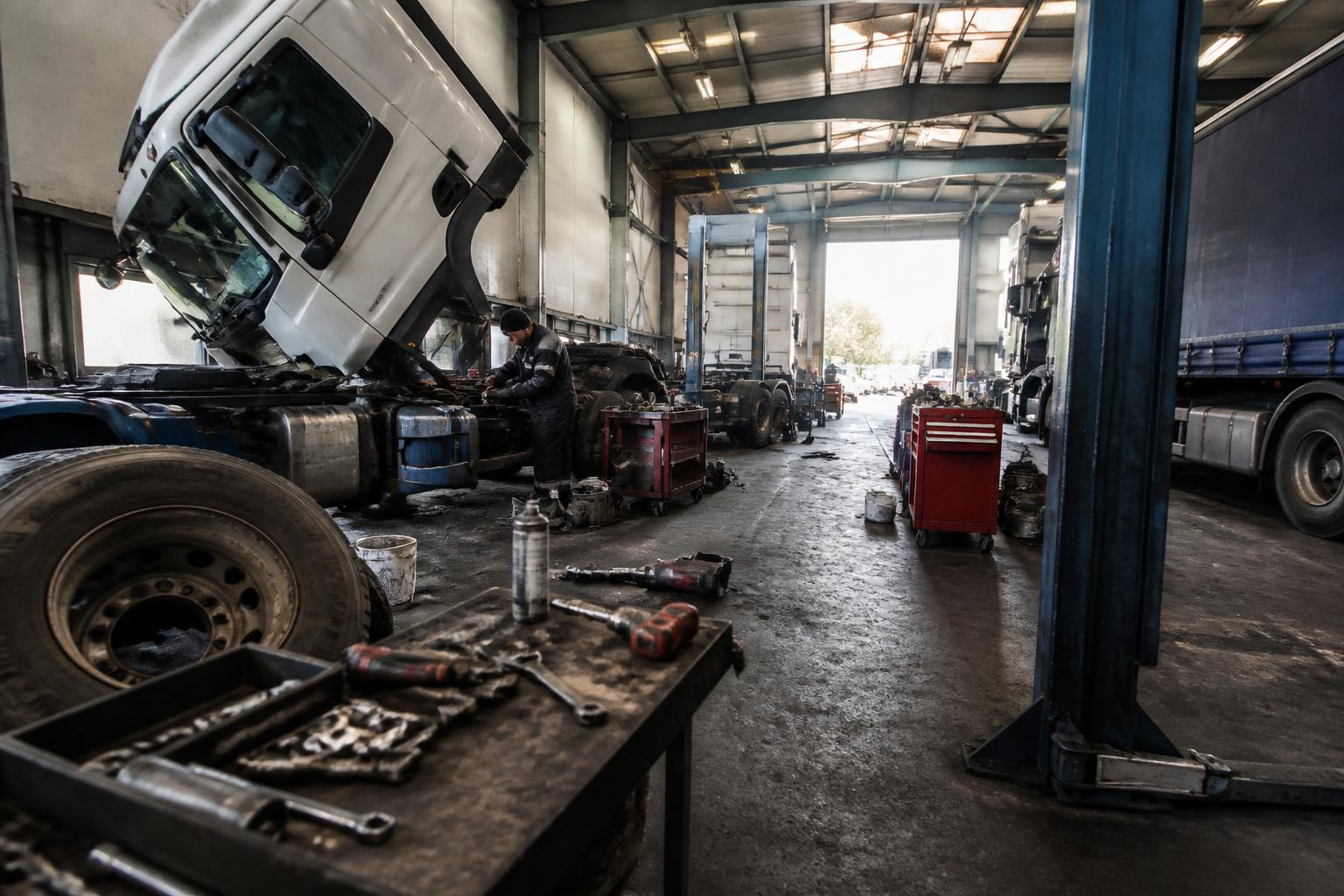
In a live HGV or LCV workshop, the phone goes while a vehicle is being booked in. A customer asks whether a unit can be squeezed in before an MOT. A fitter finds extra work halfway through a preventative maintenance inspection. A driver mentions a warning light while handing over keys. Someone needs tyre sizes. Someone else wants to know whether the trailer is safe to send out tonight.
That is where decent-looking systems start to crack.
A system can appear fine when all it has to do is hold a job card and a diary. It breaks down when it has to answer practical questions fast.
Is the vehicle on site?
Has the driver reported a defect?
Is this visit for PMI, MOT prep, a tachograph job, running repair, or all four?
Has the inspection sheet been completed?
Are the brake readings attached?
Has the rectification work been signed off?
Is the vehicle fit to leave?
If the answer to those questions sits in different tabs, different modules, or worse, outside the software entirely, staff start bypassing the system. Not because they dislike technology, but because the workshop cannot stop while someone hunts for the right screen.
Busy workshops also work on interruptions. Planned work becomes urgent work in minutes. A trailer booked for a routine service suddenly needs a light board repair to make the evening run. A unit comes in for one defect and leaves needing tyres, an ABS sensor and an MOT retest. Software built around tidy linear workflows struggles here. Workshop life is not linear.
This is one reason software chosen from a generic fleet management angle often disappoints in maintenance. It may be strong on asset lists, reminders and reports, but weak on the actual handoff between driver, service desk, fitter and controller. That handoff is where time is lost and mistakes are made.
Bad workshop flow kills adoption first
Before compliance fails, adoption usually fails.
If creating a job takes too long, staff stop creating proper jobs. If booking-in is clumsy, they write details on paper and promise to add them later. If parts cannot be linked simply to the work being done, invoices and stock notes become the real record. If technician updates are awkward, progress gets passed around by shouted conversations, WhatsApp messages or memory. If sign-off is weak, nobody is fully sure what was inspected, what was found and what was actually repaired.
That is how a system gets abandoned while still being officially "in use".
Job creation is often the first problem. In a busy workshop, a job needs to be raised in seconds, not as a mini admin exercise. Registration, customer, vehicle type, reason in, booked work, urgent defects, due dates, and whether the vehicle is waiting, all need to be visible straight away. If the software asks for too much too early, users put in the bare minimum. Then the job card becomes vague, and the workshop starts from bad information.
Booking-in matters more than many buyers think. A proper booking-in process is not just a calendar slot. It should capture who brought the vehicle, reported issues, mileage or kilometres, warning lights, damage, attached trailer if relevant, and whether the keys, wheel nut indicators, load restraint kit or ancillary equipment are present if those matter to the job. In the UK, these details can matter later when there is a dispute about condition, timing or responsibility.
Parts handling is another common failure point. Workshops do not need a theatrical stock control package. They need to know whether the filter, chamber, lamp, pad set or sensor has been ordered, received, fitted or backordered. If parts status lives in a separate system and the workshop board does not reflect it, jobs stall without anyone having a clear view why.
Technician updates need to be quick and usable with dirty hands and limited patience. Fitters will use software if it helps them. They will not use it just because management likes the dashboard. If adding a defect, attaching a photo, recording brake measurements or marking a task complete takes too long, the update gets delayed or never entered. Then the workshop controller is managing from scraps of information.
Sign-off is where paper often creeps back in. If the inspection sheet, repair notes and final release are not easy to complete in one place, someone prints something off "just for today". A month later, the real record is spread across a printed sheet, a text message, a supplier invoice and a half-finished digital job.
Once that happens, the software is no longer the workshop system. It is just one of the places information might be.
Compliance falls apart when records live in three places
This is where operational inconvenience turns into regulatory risk.
For an operator running under an O-licence, maintenance records are not a nice extra. They are part of how you show control of roadworthiness. If the evidence for inspections, defects, repairs and testing is split across software, paper files and inboxes, you are relying on reconstruction after the event. That is a bad position to be in when DVSA asks questions.
PMI records are the obvious example. A preventative maintenance inspection needs more than a diary reminder. You need evidence that it happened, what was inspected, what defects were found, what action was taken, and when the vehicle was returned to service. If the inspection sheet is in one place, the rectification note in another, and the sign-off somewhere else, the story is incomplete.
The same applies to driver defect reporting. A defect report that comes in on paper or message but is not tied clearly to the workshop job creates a gap. Was the defect assessed? Was it safety related? Was the vehicle stopped, repaired, deferred, or declared fit? If that chain is not visible, the business may know what happened in practice but struggle to prove it.
MOT dates are another simple thing that become risky when records are split. The date itself is easy. The issue is the surrounding evidence. Was the vehicle prepared? Did it fail? What was rectified? When did it pass? If a truck or trailer misses a test, or presents repeatedly with the same avoidable issues, that starts to say something about control standards, not just diary management.
Tachograph-related work is similar. Whether the issue is a calibration due date, a fault, a seal matter or a vehicle off road awaiting specialist attendance, the maintenance record needs to show what was known and what was done. The exact legal position depends on the nature of the work and who carried it out, but from an operator control point of view, scattered records make basic oversight harder than it needs to be.
This is one reason many operators end up reviewing what DVSA checks in maintenance records only after they have already felt the pain of poor recordkeeping. By then, the problem is not the rulebook. It is that the evidence trail was never captured properly in the first place.
In the UK, this matters specifically in the context of the O-licence system, DVSA enforcement and the expectations of the Traffic Commissioner. That framework is not just a general EU transport compliance model with different branding. Operators here are expected to be able to produce coherent maintenance records that show proper control. OCRS is affected by what happens on the road and what is found at inspection, but the office and workshop record behind those outcomes matters as well.
If records live in three places, nobody is fully confident before a visit. They are only hopeful that the paperwork can be assembled afterwards. Hope is not a maintenance system.
For firms trying to keep this under control, it helps when operator compliance software built around workshop evidence ties inspections, defects and scheduling together, rather than treating the workshop as an afterthought.
The wrong setup usually starts with the wrong buyer
A lot of software trouble starts before the first login.
If the buyer is looking mainly at office features, they will often choose a system that looks organised from a desk and awkward from a workshop. The reports are polished. The reminders are neat. The asset register is tidy. Then the fitters hate it, the service desk works around it, and the workshop controller keeps a whiteboard because it is the only thing everyone can trust at a glance.
That is not a user training issue. It is a buying issue.
The people who need to shape the decision are the ones dealing with live jobs. That means fitters, workshop controllers, service reception, transport managers and whoever carries the maintenance responsibility against the O-licence. If those voices are absent, the software will usually miss something basic.
Common misses include:
- no fast way to raise urgent work alongside booked work
- poor visibility of vehicle status on site
- weak links between defects, inspections and rectification
- no usable workshop board
- too many steps to update a job
- no practical method for attaching photos or evidence
- sign-off that works for admin, not for engineering reality
- maintenance schedules that ignore how vehicles are actually used
Another problem is buying software from vendors who understand fleets only as data sets. A commercial vehicle workshop is not just a source of maintenance records. It is a place where decisions are made under pressure, with incomplete information, while trying to keep legal compliance and customer service intact. If the software was not built from that environment, it often shows.
That is where Fleeta’s background matters. The software came out of a working HGV workshop, not a product meeting. The people writing it have had to run jobs through a real workshop day, with all the interruptions and awkward edge cases that come with it. You can see that in workshop-led fleet and maintenance software shaped by a live HGV operation, because the starting point is not what looks good in procurement. It is what still works when the yard is full and the phone will not stop.
What working software looks like in a five to hundred vehicle operation
For a UK haulage firm or commercial vehicle workshop running five to a hundred vehicles, working software is rarely the one with the longest feature list. It is the one that survives repeated use without staff quietly abandoning it.
First, it has to make job creation fast. A vehicle comes in, or a defect is reported, and the job is live immediately. Not perfect, but live. The key details are visible at once, and more can be added without losing control of the day.
Second, it needs a proper workshop view. Not just a list of jobs, but a usable picture of what is booked, what is waiting, what is in progress, what is blocked by parts, what is ready for sign-off and what cannot leave. A workshop controller should not need three screens and a paper pad to understand the state of the day.
Third, it should connect planned maintenance and reactive work. In real life, a PMI often generates repairs. A defect report may turn into additional inspection work. An MOT prep may uncover items that affect the next booking. The software should follow that chain naturally.
Fourth, evidence capture must be practical. Inspection sheets, photos, notes, measurements, defect reports, parts used, and sign-off all need to sit against the same record. Not because tidy systems are pleasing, but because roadworthiness evidence needs to be retrievable later without detective work.
Fifth, it has to reflect UK compliance reality. That means supporting PMI scheduling, defect management, MOT planning, service history, and the records an operator may need to show DVSA. It also means understanding that the person using the system may be both transport manager and owner, or transport manager and workshop decision-maker. In smaller operations, the roles overlap. The software has to help that person see risk quickly.
Sixth, technician input must be simple enough to happen in the bay, not in theory back at a terminal later. If the workshop relies on delayed updates, the system will always lag behind reality.
Seventh, the software must cope with exceptions. Jobs split. Vehicles do not arrive. Parts fail. Customers change their minds. A unit needs to go back out before all planned work is finished. No serious workshop system should pretend those situations do not exist.
Finally, good software does not claim to make maintenance easy. It makes it visible. That is the difference. Running a compliant, productive workshop is hard. Keeping records fit for an O-licence, keeping vehicles available, and keeping standards high under pressure is hard. Software earns its place when it reduces blind spots, shortens the gap between what happened and what got recorded, and gives the people responsible a clear view of what still needs attention.
That is the practical answer to why fleet software fails in a busy workshop. It fails when it was designed for administration first and workshop reality second. It fails when the workflow is too slow for live use. It fails when compliance evidence is fragmented. And it fails when the buyer never asked the people on the workshop floor what they actually need.
The systems that last are usually less glamorous than the brochures suggest. They are quicker. Clearer. Closer to the job. And they are built on the assumption that a workshop is noisy, interrupted and under pressure, because that is exactly what it is.
Why do workshop staff stop using fleet software?
Usually because it adds steps without helping the job get done. If booking in, updating work and closing jobs are slower than paper or a phone call, people work around it.
Can software fix missed PMI inspections on its own?
No. It can help schedule, chase and record, but it cannot replace a workable maintenance plan, enough workshop capacity or proper sign-off of the preventative maintenance inspection.
What records matter most if DVSA asks questions?
Clear evidence of maintenance planning, completed PMI records, defect reporting and rectification, MOT history and anything else needed to show roadworthiness was properly managed.
Is paper always a problem in a workshop?
Not by itself. The problem is when paper, spreadsheets and messages all hold different versions of the same job, with no reliable final record for compliance or invoicing.
What is the biggest mistake small fleets make when buying software?
Buying for reporting first and workshop use second. If the people doing the work cannot use it quickly under pressure, the reports will be wrong anyway.