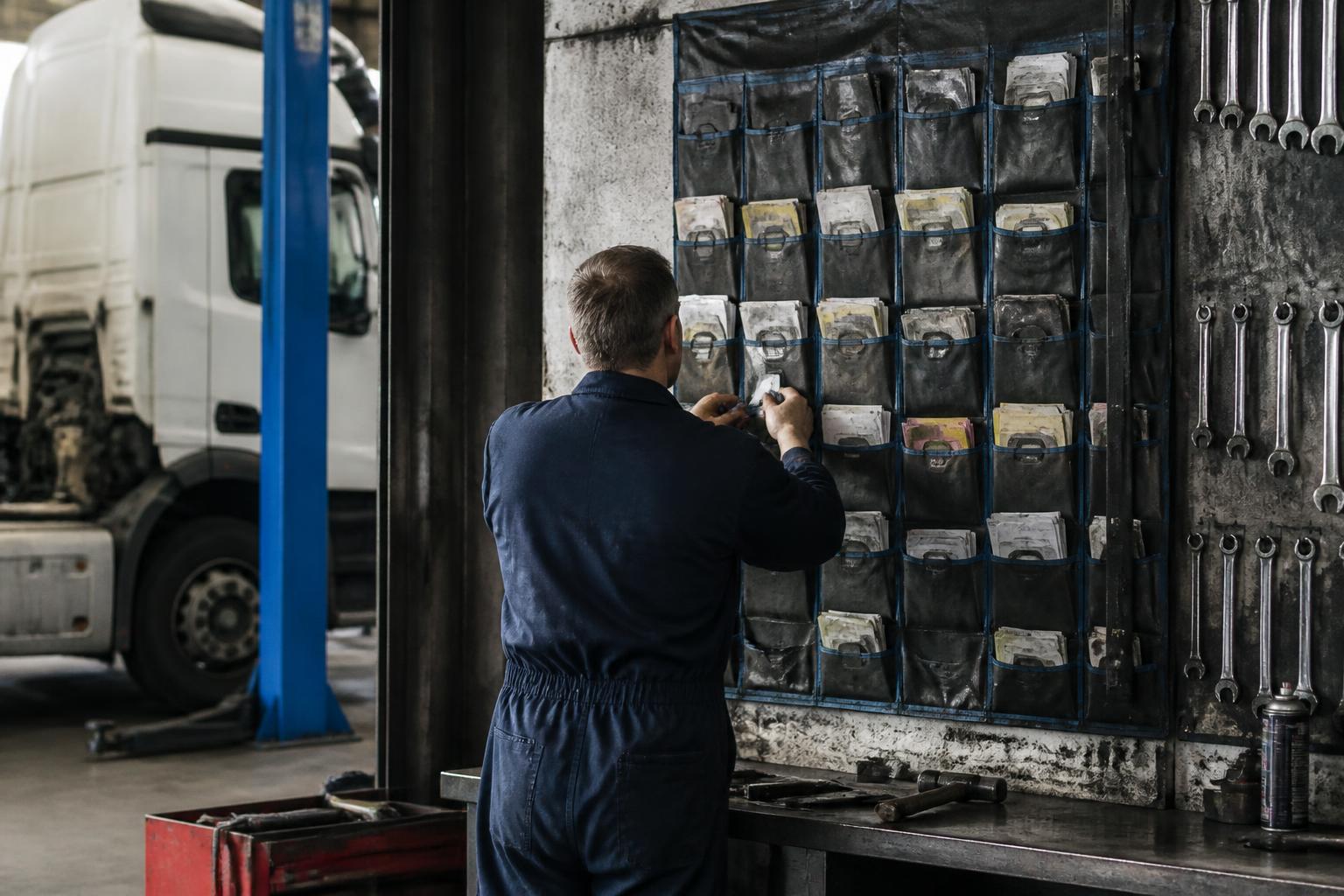

If DVSA has stopped a vehicle, carried out a roadside inspection, or come into the yard, the job is not finished when the examiner leaves. That is when you need to pull together a maintenance pack that shows a clear story. What was found, what condition the vehicle or trailer was in before the encounter, what action we took afterwards, and why our systems should be trusted.
When people ask us how to prepare maintenance evidence after a DVSA encounter, the practical answer is this. Start with the exact facts of the stop or visit. Then build a dated vehicle history around it. Then prove the defect was repaired and the unit was properly checked before it went back out. If DVSA is looking wider than one defect, add the maintenance systems behind the paperwork. Finally, review the whole pack as if you were the examiner or the Traffic Commissioner looking for holes.
Start with the DVSA encounter itself
Before you start pulling old files, capture the details of the encounter while they are still fresh.
Get the basics down first:
- date and time
- location
- vehicle registration
- trailer number, if relevant
- driver name
- examiner name, if known
- what type of encounter it was, roadside stop, premises visit, fleet check, annual test follow-up, or desk-based request
- what documents were requested at the time
- what defects or concerns were raised verbally
- whether any prohibition was issued
- whether an immediate or delayed prohibition applied
- whether any inspection report, notice, or advisory was handed over
If the driver was stopped at the roadside, get their account the same day. Do not wait until next week when the details have blurred. Ask what the examiner checked. Brakes, tyres, lights, load security, spray suppression, tachograph, warning lamps, steering play, leaks, bodywork, marker boards, anything raised. If the driver signed anything, get a copy.
If paperwork came from the stop, scan it at once and save it against the correct vehicle or trailer. That includes prohibition notices, inspection reports, and any notes made by your own staff. If the issue was identified during a site visit, note exactly what fleet sample DVSA looked at. One vehicle with a defect is one problem. A pattern across several PMIs is another.
Also record the vehicle’s operating status at the time. Was it loaded, empty, inbound to the workshop, due a preventative maintenance inspection, just out of MOT, or running under a hire arrangement? Those details matter later because they help explain timing and decisions.
If the encounter involved a prohibition, note the category and the wording exactly. Do not paraphrase it. The difference between a tyre issue, brake imbalance, and a maintenance documentation concern matters. So does whether the prohibition related to an actual defect or the inability to satisfy DVSA about roadworthiness on the spot.
At this stage, do not argue the case in your own notes. Stick to facts. You are building a record, not drafting a defence.
Build a clean vehicle history
Once the encounter is logged, the next job is to build a timeline that makes sense to someone outside your business.
Start with the core maintenance records for the vehicle or trailer involved:
- PMI sheets
- preventative maintenance inspection schedule
- repair history
- driver defect reports
- brake test records
- wheel torque records where relevant
- MOT history
- tachograph calibration records if they matter to the issue
- odometer or hubodometer readings
- job cards
- parts invoices if they support the repair history
- technician notes
- road test notes where applicable
The timeline needs to show what happened before the DVSA encounter and what happened after it. If the unit had a PMI two weeks before the stop, include it. If there was a driver defect report three days before the stop mentioning the same issue, include that too. If there was a repair booked but not completed, that needs to be in the file as well. Missing awkward records is worse than including them and explaining them.
Put the documents in date order. That sounds obvious, but many packs fail here. We often see people send over a pile of PDFs with no sequence, no index, and no explanation of which trailer inspection belongs to which asset. If an examiner has to work to understand your records, you are already on the back foot.
For each document, check that it identifies the right vehicle or trailer. Mixed registrations, old trailer fleet numbers, and handwritten job cards with no unit number are common problems. If you have to add a covering note to explain that trailer 502 was renumbered as T12, do it clearly.
Mileage and date consistency matter. A PMI every six weeks on paper means little if the mileage jumps suggest the vehicle was heavily used and defects were not being picked up in between. Equally, a trailer with no mileage record at all needs another way of showing inspection frequency and usage. In the UK, DVSA will expect a maintenance plan that reflects actual use, not a generic interval copied across the fleet.
If the vehicle is maintained by an external provider, include the service agreement or at least the inspection booking trail. Email confirmations, workshop bookings, and signed inspection reports all help show the maintenance was planned and carried out. We covered that point in more detail in how to prove maintenance was planned for a DVSA visit.
Do not forget the records around the encounter date itself. If the unit was inspected the day after the stop, that inspection belongs in the pack. If it was taken off the road pending parts, that should be visible from the records, not just said later in conversation.
The aim is simple. Someone reading the file should be able to follow the vehicle’s maintenance life without guessing. If you want a wider checklist of what usually stands up best, we set that out in which maintenance records stand up in a DVSA audit.
Prove the defect was dealt with properly
This is the part many operators undercook. They show that a repair happened, but not that the defect was properly controlled from discovery to return to service.
If DVSA found a defect, you need to show four things:
- the defect was identified and recorded accurately
- the vehicle or trailer was controlled after the defect was known
- the repair was completed by a competent person
- the unit was checked and released back into service properly
Start with the defect record itself. That could be the DVSA notice, a workshop job card, a driver defect report, or an internal quarantine note. The wording should match the actual issue. “Tyre changed” is weak. “NSF outer tyre removed due to exposed cords, replacement fitted and wheel nuts torqued” is useful.
Then show what happened to the asset immediately afterwards. If it was prohibited, that is straightforward. If it was not prohibited but should not have been used until repair, your records need to show that decision. A workshop booking alone is not enough if the vehicle kept running meanwhile. Use off-road status changes, planner notes, keys-in records, or transport office instructions if you have them.
The repair evidence should include:
- the job card
- who carried out the work
- date and time
- parts fitted
- any measurements or test results
- any follow-up inspection
- sign-off by the technician or workshop controller
For brake defects, include the brake performance evidence, not just “brakes adjusted”. That might be a laden roller brake test, a decelerometer result where appropriate, or workshop test printout. For steering or suspension concerns, include the inspection findings and any replacement parts. For lighting defects, a signed repair note may be enough if the issue was simple, but if there was wiring damage or repeat failure, show the fuller investigation.
If the issue led to a prohibition, make sure the prohibition clearance is in the pack. If the prohibition required DVSA to remove it, include the evidence of that release. If the prohibition was delayed, the file should show the unit was repaired before the deadline and not used unlawfully in the meantime.
Then include the return-to-service check. That can be a post-repair inspection, road test sheet, brake test, or a workshop release note. What matters is that someone checked the vehicle was fit to go back out, not just that the repair line on the invoice was closed.
This is especially important where the defect points to a system issue. A cut tyre and a failed lamp can be isolated. Repeated brake defects, poor PMI quality, or defects that drivers should have spotted can trigger wider questions about roadworthiness management and OCRS impact.
If the concern is about records as much as repair, it helps to have fleet maintenance records that stand up to DVSA rather than a patchwork of workshop paper and transport office spreadsheets.
Include the systems behind the paperwork
Sometimes DVSA is only interested in one vehicle. Sometimes the encounter opens the door to your maintenance control as a whole. If that is where things are heading, one repaired defect will not settle it.
Add evidence of the systems that sit behind the incident.
First, your inspection planning. Include the maintenance schedule for the vehicle and, if needed, the fleet sample around it. Show the planned PMI interval, the actual completion dates, and any reasons for variation. If inspections slipped, explain why and what control existed. A missed inspection with no escalation is a different picture from a one-day delay because the vehicle broke down and was inspected in the workshop the next morning.
Second, your driver defect reporting process. Include examples of daily walkaround checks, nil defect reporting if you use it, escalation routes, and how defects are handed to the workshop. If the issue found by DVSA should have been spotted on a driver check, be honest about that and show what corrective action followed. Training records, toolbox talks, and updated defect categories can all help.
Third, your workshop control. Who reviews completed PMIs? How are safety defects separated from routine repairs? How do you know a vehicle due for inspection is not missed? If you subcontract maintenance, who checks the provider’s paperwork for quality and completeness? On an O-licence, the operator remains responsible even when the spanners are in someone else’s hands.
Fourth, your brake testing and safety inspection standards. If the defect involved brakes or roadworthiness generally, include your policy on brake tests at PMI intervals, annual test preparation, and loaded testing where practical. In the UK, that expectation is shaped by DVSA guidance and your maintenance undertaking. It is not enough to say the workshop always has a look.
Fifth, your management response after the encounter. That might include:
- an internal audit of recent PMIs
- retraining fitters on inspection quality
- retraining drivers on walkaround checks
- changing inspection intervals
- adding workshop sign-off steps
- introducing a better maintenance planner
- reviewing outsourced maintenance providers
This wider evidence matters because DVSA and, in more serious cases, the Traffic Commissioner are not just asking whether one defect was repaired. They are asking whether your system can be trusted tomorrow.
That is where workshop-led control makes the difference. We built our own tools because a working HGV workshop needs records that show what really happened, not what somebody hoped was happening. If you are still relying on a whiteboard and scattered PDFs, it is worth looking at fleet software that stops maintenance getting missed before the next encounter tests the gaps.
Check the pack before anyone else reads it
Before you send anything to DVSA, a maintenance provider, your solicitor, or put it in front of a public inquiry brief, review it hard.
We use a simple check.
Are all the documents dated?
Are the dates logical?
Are the registrations and trailer numbers consistent?
Are the PMI sheets signed by the technician and, where required, reviewed?
Are defect reports legible?
Do the mileage readings make sense?
Are brake test results attached where they should be?
Is there evidence of rectification, not just inspection?
Is there a clear return-to-service point?
If there was a prohibition, is the release evidence there?
Are there unexplained gaps between driver defect reports, PMIs, repairs, and use?
Unsigned inspections are a common weakness. So are PMIs with no rectification detail, or job cards that say “done” with no explanation of what was actually done. Another weak point is inconsistent dates caused by documents being typed up later. If that happened, explain it in a short covering note rather than hoping no one notices.
Look for contradictions. If a PMI says tyres were satisfactory on Monday but DVSA found exposed cords on Tuesday, what is the explanation? Fast damage can happen, especially on trailers. But if that is the position, support it with the driver report, usage details, and repair findings. Do not leave the reader to conclude the PMI was poor.
Check that the pack answers the obvious next question every time. If there was a defect, where is the repair? If there was a repair, where is the verification? If there was a missed inspection, where is the escalation? If there was a concern about tachograph calibration, where is the certificate? If there was a roadworthiness issue after MOT, what changed between test and stop?
Keep the covering summary short. One page is often enough. Set out:
- what happened
- what records are enclosed
- what action was taken
- what system changes were made, if any
That summary is not there to dress things up. It is there to help the reader follow the evidence in the right order.
A good pack does not pretend defects never happen. Vehicles work for a living. Defects do happen. What matters is whether we can show proper control before and after the DVSA encounter. Clear records, proper rectification, and a maintenance system that matches the reality of the fleet are what protect the O-licence when questions get serious.
If you can build that file quickly and cleanly, you are in a much stronger position. If you cannot, the problem is usually not the filing. It is the maintenance control underneath it.
What maintenance records should I pull first after a DVSA stop?
Start with the DVSA paperwork, the latest PMI, recent driver defect reports, repair job cards, MOT history and any brake test evidence for the vehicle or trailer involved.
Do I only need records for the defect DVSA found?
No. In practice you usually need enough records to show the wider maintenance picture, not just the single fault. That means the inspection history, repairs and how defects are reported and closed.
Should I include records after the DVSA encounter as well?
Yes. If a defect was found, post-encounter evidence matters. Include the repair record, parts fitted if relevant, any reinspection and the date the vehicle returned to service.
What if there are gaps in the PMI file?
Do not ignore them. Find out whether the inspection happened but was filed badly, or whether it was missed. Be ready to explain the gap and what you changed to stop it happening again.
Is a spreadsheet summary enough?
No. A summary helps, but DVSA will want the underlying records. Use the summary as an index, then back every point with the original inspection, repair and defect documents.