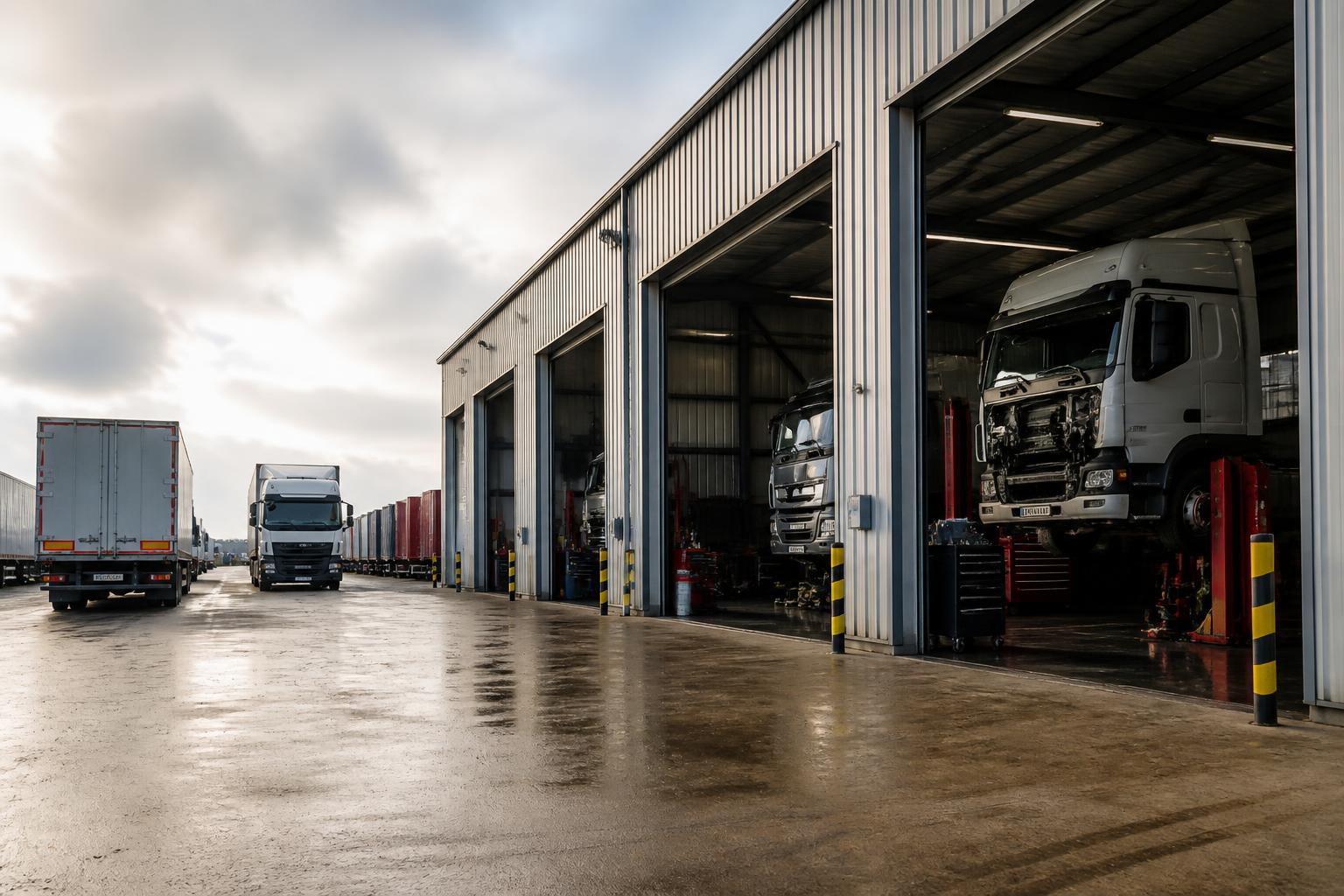
The app that holds up at PMI time is the one that helps you prove control, not just book a date in a diary. In a UK HGV operation, that means it must show what was planned, what was found, what was repaired, what was deferred, who made each decision, and when. If you cannot pull that up quickly, in order, for a vehicle or trailer under scrutiny, the app is not doing the job.
A lot of software looks fine in a demo because it can create a service event and store a PDF. That is not the same as supporting a real preventative maintenance inspection process in a busy workshop, with missed bookings, defects from drivers, brake test evidence, MOT prep, contractor invoices, and the awkward moments when DVSA wants records now, not after lunch. That is where the difference shows.
What a maintenance records app needs to do in a UK HGV operation
The minimum is not complicated, but it is stricter than many systems allow.
First, it must schedule and record every PMI at the right interval for each vehicle and trailer. Not a vague reminder. A proper planned date, a completed date, and a clear view of anything overdue. If you run mixed work, some units may need tighter intervals than others. A six weekly pattern for one part of the fleet and a different pattern for another is normal. The app needs to cope with that without workarounds.
Second, it must capture the actual preventative maintenance inspection record. That means the inspection sheet itself, the items checked, the defects found, the result, and who carried it out. If you inspect in house, the technician needs to complete that record properly. If maintenance is outsourced, you still need the same evidence back from the provider and attached to the asset record.
Third, it must handle defects from daily walkaround checks through to rectification. This is where many systems break. They can log a defect, but they do not show the chain clearly enough. You need to see the reported defect, the decision on whether the vehicle remained in service, the repair action, any parts used, and sign-off to return to roadworthiness. If a prohibition risk item was reported, that trail matters.
Fourth, it must store repair records in a way that links back to the inspection or defect that created the job. A pile of workshop invoices in a document tab is not enough. If a PMI found brake imbalance and the repair was done two days later, the app should let you see both together.
Fifth, it must hold MOT preparation and test outcome records. Not because MOT is the whole maintenance story, but because test history often exposes weak spots in the process. If a vehicle fails on something that should have been picked up earlier, you need to see where the control failed.
Sixth, it must preserve evidence of roadworthiness. That includes inspection sheets, brake performance records where relevant, repair details, defect rectification, test certificates, and any supporting documents that explain why a vehicle was or was not used. If the record is incomplete, the problem is usually not that a job was never done. It is that nobody can prove it.
For UK operators, this sits under the O-licence regime and DVSA expectations. A general EU fleet tool may talk about maintenance, but if it is built around broader asset servicing rather than UK HGV compliance, it often misses the detail that matters here. That is not a small gap. It is the difference between a neat dashboard and a usable maintenance file.
If you want a clearer view of the records that need to stand up under scrutiny, we covered that in which maintenance records stand up in a DVSA audit.
Where the main app types differ
Most operators we speak to are choosing between four broad types.
The first is the workshop-led system. This is built around inspections, defects, repairs, technician activity and vehicle history. In practice, this is usually the best fit for five to one hundred vehicles, especially where the workshop is doing real maintenance work rather than just checking boxes. It tends to handle PMI planning properly, and it usually reflects how vehicles move through a workshop day. The downside is that some workshop systems are weaker on wider fleet tasks unless they are linked to broader fleet tools.
The second is the broad fleet platform. These often combine compliance, driver admin, fuel, telematics, documents and reporting. They can be useful if you want one place for many functions. The risk is that maintenance becomes one module among many. You get reminders and attachments, but not enough depth in the workshop process. For a transport office, that can look fine until someone asks for the full record behind a missed or late inspection.
The third is the paper-to-PDF tool. This is common in smaller fleets moving away from clipboards. A fitter fills in a digital form, a PDF is created, and it gets stored somewhere. Better than paper in a filing cabinet, yes. Good enough on its own, often no. These tools usually struggle with scheduling logic, defect follow-through, asset history, and reporting overdue work. They digitise the sheet, but not the control.
The fourth is generic job management software. Plenty of workshops try this because they already use it for bookings and invoices. It can work for labour and parts, but it rarely fits HGV maintenance without heavy compromise. You end up bending customer-job software into a compliance record system. It does not naturally understand PMI intervals, safety inspection history, or the difference between an estimate and a roadworthiness decision.
For fleets of five to twenty vehicles, a paper-to-PDF setup can look tempting because it is simple. The trouble starts when the same person is chasing bookings, defects, MOT dates and missing sheets. For twenty to one hundred vehicles, broad fleet software often wins the initial beauty contest because it shows everything on one screen. But if the maintenance side is thin, the workshop and transport office start keeping parallel records, and that is where mistakes creep in.
The better question is not which app has the longest feature list. It is which type matches where maintenance is actually controlled. If the control point is the workshop, start there.
What matters when DVSA asks for records
When DVSA asks for records, speed and order matter almost as much as the records themselves.
You need to be able to retrieve, for any given vehicle or trailer, the PMI schedule, completed inspection sheets, reported defects, rectification records, MOT history, and any evidence supporting roadworthiness decisions. If maintenance is outsourced, you also need the contractor documents, not just your own note saying the vehicle went in.
The weak point is often retrieval. Records exist, but they are split across email, shared folders, WhatsApp photos, workshop paperwork and a transport manager's notebook. That is not a record system. That is a scavenger hunt.
Audit trails help because they show sequence and responsibility. If an inspection was moved, who moved it and why? If a defect was marked safe to defer, who made that call? If a repair was completed after the vehicle returned to service, what was the justification? A proper audit trail does not guarantee every decision was right, but it does show there was a controlled process.
This matters for OCRS too. Poor maintenance records do not stay a paperwork issue for long if they are linked to prohibitions, annual test problems or roadside findings. And if questions reach the Traffic Commissioner, the discussion is not just about one missing sheet. It becomes about whether the operator had effective maintenance systems at all.
The hardest cases are not always dramatic failures. More often, it is steady slippage. PMIs done late. Sheets completed badly. Defects closed without enough detail. Contractor paperwork not chased. Then an audit happens, and nobody can produce a clean run of evidence. We have seen operators who were maintaining vehicles reasonably well in practice, but their records made them look out of control.
That is why the app needs to do more than store files. It needs to make missing records visible early. Overdue inspection, missing sign-off, no repair linked to a fail item, no document returned from the external workshop, these should stand out before DVSA points them out.
For a closer look at what gets examined, see what DVSA checks in maintenance records and records to have ready for a DVSA O-licence audit.
How to compare apps without getting lost in demos
Demos are where weak systems look strongest. Everything is clean, every vehicle is compliant, and nobody asks awkward questions. To compare apps properly, use a short checklist and insist on seeing the messy parts.
Start with PMI scheduling.
Can it set different inspection intervals by vehicle or trailer? Can it show planned date, completed date and overdue status clearly? Can it record reasons for date changes? Can it show the full inspection history on one asset without digging?
Then check the inspection record itself.
Can the technician complete a proper preventative maintenance inspection form on screen? Can you require mandatory fields before sign-off? Can you attach photos where needed? Can you record pass, fail, advisory and safety critical findings distinctly?
Next, test defect workflow.
How are driver defects brought in? Can a defect become a workshop job without retyping it? Can you separate defects that are repaired immediately from those awaiting parts? Can the system show who assessed the defect and whether the vehicle stayed in service?
Then look at technician use.
Is it usable on a workshop floor with dirty hands and patchy signal? Can technicians find the right job fast? Can they record labour, notes and parts without ten screens? If you use external maintenance providers, can their paperwork be added easily against the right asset and event?
Document storage is another point where demos hide problems.
Can you attach inspection sheets, brake test printouts, MOT certificates, invoices and photos to the same maintenance event? Can you search by registration, fleet number, trailer number or date range? Can you export a complete vehicle record when asked?
Reporting matters too.
Can you see overdue PMIs, open defects, repeat defects and missing documents? Can you identify vehicles with frequent brake or tyre issues? Can you report by depot, by contractor, or by asset class if you run a mixed fleet?
Finally, ask about links to other data.
A tachograph feed is not a maintenance system, but mileage can help with service planning and asset context. Fleet data links can reduce duplicate entry if they are done properly. Just do not let a telematics integration distract from the basic question, can this system prove maintenance control?
One useful test is to ask the supplier to show you this exact scenario. A vehicle had a PMI last month. It failed on a steering item and a tyre issue. The steering was repaired the same day. The tyre was replaced the next morning. Two days later, the vehicle came in with a driver-reported light defect. Show the whole record in order, with dates, people, and supporting documents. If the answer involves opening six tabs and explaining what should have happened, move on.
If you are still deciding what good planning looks like before records even come into it, which HGV maintenance planner actually holds up under DVSA is worth reading alongside this.
Which type of app suits your fleet and workshop setup
If you maintain in house, use a workshop-led system. That is the simple answer. Your risk is not lack of data. It is workshop activity happening faster than the records can keep up. The app needs to match the way jobs are actually carried out, from booking to inspection to repair to sign-off.
If all maintenance is outsourced, you still need stronger control than a calendar and a shared folder. In that setup, the best app is usually one that gives the transport office clear planning and chases complete records back from the provider. The key question is whether it makes missing evidence obvious. Outsourcing the work does not outsource responsibility under the O-licence.
If you have a mixed setup, some work in house and some contracted out, choose the system that can join both halves of the story. This is where many operators struggle. Internal jobs are recorded one way, external jobs another, and the vehicle history ends up split. Mixed setups need one maintenance record, not two.
For a single-site fleet, usability in the workshop is usually the deciding factor. If technicians hate it, records become thin very quickly. For multi-site or multi-depot operations, consistency matters more. You need the same inspection standards, the same defect workflow, and the same document rules across sites, otherwise your records vary by depot and so does your risk.
For smaller fleets, simplicity still matters. But simple should mean easy to use, not light on evidence. A compact system that captures the right records every time is better than a broad platform full of modules nobody uses properly.
That is the practical answer to which fleet record app holds up at PMI time. It is the one built around the maintenance event itself, with enough structure to prove what happened and enough flexibility to reflect real workshop life. Not the one with the prettiest dashboard. Not the one that stores the most PDFs. The one that lets you put your hand on the right record, in the right order, while the question is being asked.
We build our systems from that workshop-first view because we run one ourselves. That changes the priorities. We know the hard part is not creating another form. It is keeping the inspection, the repair, the defect, the parts, the sign-off and the evidence tied together when the day goes sideways, a technician is off, a unit is needed back out, and the paperwork still has to stand up later. That is what an HGV fleet maintenance records app needs to do if it is going to hold up when PMI time comes round again.
What records should an HGV maintenance app keep?
At minimum, it should hold preventative maintenance inspection records, reported defects, repair history, brake test evidence where used, MOT-related documents, vehicle details and a clear sign-off trail.
Can an app replace paper maintenance files?
Yes, if records are complete, retrievable and usable in practice. The issue is not paper versus digital. It is whether you can show accurate maintenance history quickly when asked.
Does DVSA require a specific maintenance software system?
No. Operators are not required to use a particular app. What matters is keeping proper maintenance records and being able to demonstrate effective systems for roadworthiness management.
Is a generic job management app enough for HGV maintenance?
Usually not for long. Generic tools can log jobs, but they often fall short on PMI history, defect traceability, vehicle-based scheduling and the audit trail needed for compliance work.
What is the biggest mistake when choosing a fleet records app?
Buying on dashboards instead of workshop use. If fitters, service staff or transport managers avoid using it properly, the records will be incomplete and the system will fail when tested.