
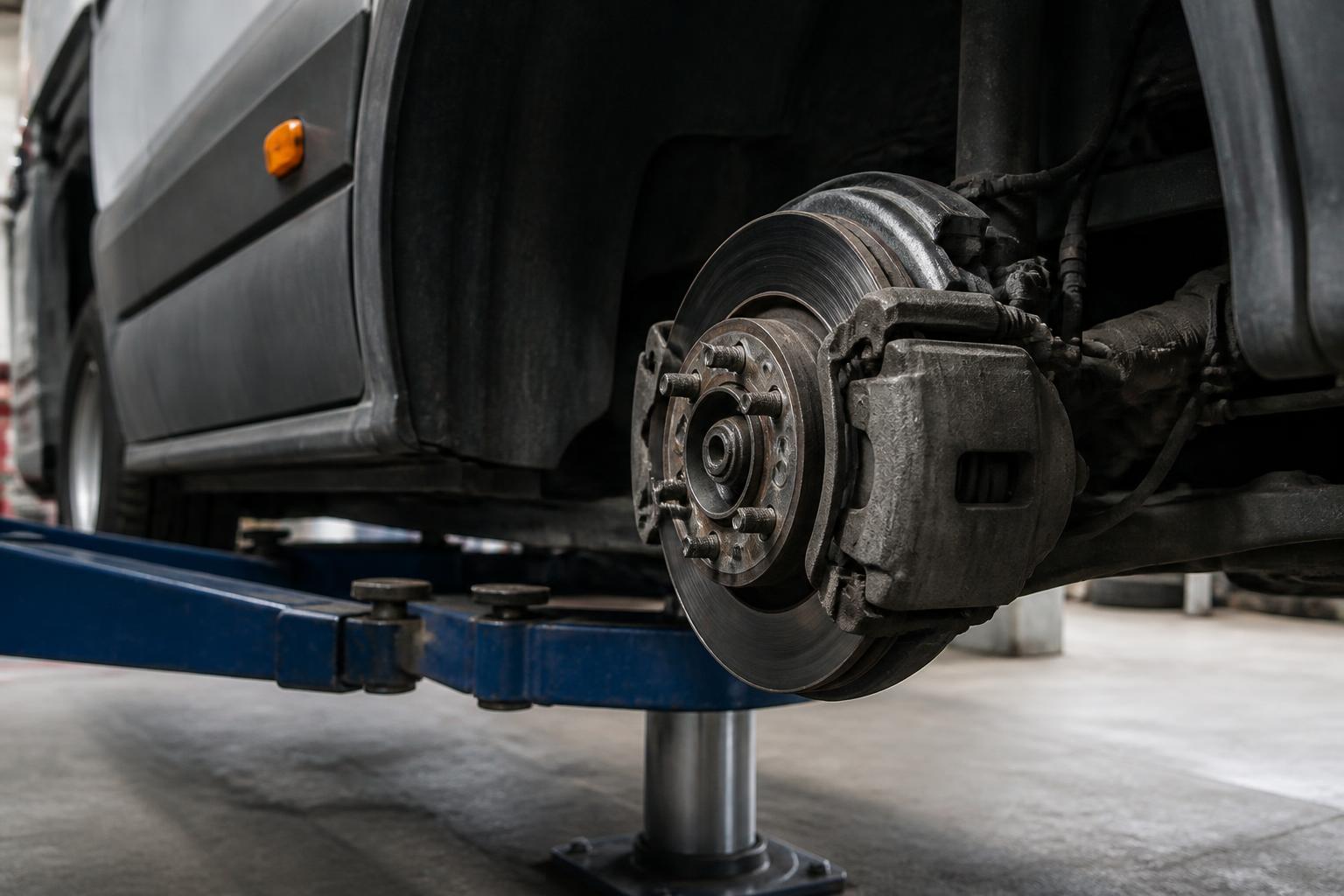
When DVSA asks whether a reported defect was rectified, they are not asking whether your driver told you about it. They are asking whether you can prove the full chain of control from report, to decision, to repair, to return to service. If that chain is broken on paper, it may as well be broken in reality.
That is the point behind any sensible answer to the question of how to prove driver defect reports were rectified for DVSA. You need records that tell a clear story without explanation from memory. What was wrong. When it was found. Whether the vehicle was stopped, restricted or allowed to continue. What repair was done. Who did it. When it was signed off. When the vehicle went back into use.
What this article covers that defect-reporting articles do not
Most articles about driver defects focus on collection. Daily walkaround checks. Nil defect reporting. Driver apps. Whether reports reach the workshop. All of that matters, but it is only the front end.
The harder part comes later, usually during a DVSA investigation, fleet check, maintenance investigation, or a Public Inquiry where the Traffic Commissioner wants to see whether your systems actually controlled roadworthiness. At that point, saying "we reported it" is not enough. Neither is saying "the workshop sorted it". DVSA will want to see evidence that the defect was rectified, or that the vehicle was not used until it was.
That means this is not really an article about reporting. It is about proof.
In practice, the proof usually sits across several records. A driver defect report. A workshop job card. Technician notes. Parts issue. A brake test printout if braking was involved. A sign-off by a competent person. A return-to-service time or status change. The problem is not that operators have none of these. The problem is that they often have them in different places, with no clean link between them.
If you already have a decent process for collecting reports, the next step is making sure each report can be followed through to closure. We cover the reporting side separately in keeping driver defect reports under control on an O-licence, but the issue here is narrower. It is about evidence that stands up when someone outside your business asks to see it.
What DVSA will expect the record to show
At minimum, the record needs to tell a believable sequence of events.
First, what was reported. "Brake issue" is weak. "Nearside rear brake binding", "offside front marker lamp inoperative", or "air leak audible at red line coupling" is better. The more specific the defect description, the easier it is to judge seriousness and match it to the repair.
Second, when it was reported. Date and time matter. If the driver reported the defect at 06:15 and the vehicle left site at 06:30, you need to show why that was acceptable, if it was acceptable at all. If the defect was safety related, that timing can become the whole case.
Third, how serious it was. Your record does not need legal theatre. It does need a clear decision. Safety critical, vehicle off road. Minor, repair before next duty. Monitor and inspect at workshop. What matters is that someone assessed the defect and recorded the operating decision.
Fourth, what action was taken. Not just "sent to workshop". DVSA will expect to see the actual rectification or inspection outcome. For example, "lamp bulb replaced and function tested", "air line replaced", "wheel studs checked and torqued", "brake imbalance investigated, caliper replaced, brake test carried out".
Fifth, who did it and when. Named people matter. Driver name. Assessor or transport manager. Technician or external repairer. Authorising person for return to service. Dates and times for each stage make the story testable.
Sixth, when the vehicle returned to service. This is often missed. A closed workshop job is not always proof that the vehicle was released back into operation. You need some record of status or sign-off that shows the vehicle was available for service from a given date and time.
For a UK operator, this is tied directly to your O-licence undertakings around roadworthiness and maintenance systems. A weak audit trail can damage OCRS and lead DVSA to look harder at the rest of your maintenance records, including PMI, preventative maintenance inspection intervals, MOT history and brake testing.
How to prove the vehicle was not used before the defect was rectified
This is where many operators get caught. They can show the defect report. They can show the repair invoice. They cannot show what happened in between.
If the defect was serious enough to stop use, record that decision explicitly. Mark the vehicle as off road, VOR, quarantined, or whatever term you use internally. The label matters less than the fact it changes the vehicle's operational status in a dated and timed record.
Then make sure the rest of your records support that decision.
If the vehicle was stood down, there should be no conflicting evidence that it was used. Check for:
- tachograph activity that suggests the vehicle moved
- delivery records or traffic allocations
- fuel issue records
- gate in and gate out times
- workshop movement logs
- replacement vehicle allocation for the planned job
A short movement for workshop purposes is different from a loaded road run, but if the vehicle moved, your records should explain why.
Sometimes the right decision is not full stop use. It may be restricted use, such as return to depot only, move empty to workshop, or use until end of shift where the defect is genuinely minor and does not affect roadworthiness. If that is the decision, say so clearly and record who made it. Vague assumptions are what cause trouble later.
For example, a cracked mirror glass or an inoperative side marker is not in the same category as a steering defect, brake issue or tyre cord exposed. But if the vehicle continued in service, your record should show that someone assessed the defect and decided continued use was lawful and safe until repair. A note such as "continue in service" with no reason is thin. "Offside rear marker lamp out, assessed non-safety critical for daytime return to depot, repair booked 14:00" is much stronger.
Time stamps do a lot of work here. A defect reported at 07:10, vehicle marked off road at 07:12, workshop job opened at 07:25, repair signed off at 08:05, vehicle returned to service at 08:10, that is a controlled sequence. Without times, you are left arguing from memory.
This is also where separate systems can undermine each other. If your defect app says the vehicle was stopped, but your traffic board shows it on a delivery, DVSA will notice. If your workshop system says the repair was done at 15:00 but the vehicle's tachograph shows it on the road all morning, you need a credible explanation. The records do not have to be fancy, but they do have to agree.
What counts as convincing rectification evidence in a workshop
A workshop sign-off needs substance. "Fixed" is not substance.
The best evidence is a job record that ties back to the original defect and shows the actual work done. In a good file, we would expect to see most of the following:
- vehicle or trailer registration and fleet number
- defect report number or clear reference to the original report
- date and time job opened
- defect complaint as reported
- technician findings after inspection
- work carried out
- parts fitted
- date and time work completed
- technician name
- inspection or test result after repair
- authorisation for return to service
Technician notes matter because they show diagnosis, not just replacement. If a driver reports poor braking and the job card says only "brakes repaired", that tells DVSA very little. If it says "driver reported poor braking on trailer. Found NS rear caliper seized. Replaced caliper, pads contaminated so replaced both on axle. Adjusted and road tested. Roller brake test completed and printout attached", that is proper evidence.
For brake defects, keep the brake test result with the job if you can. If the repair affects braking performance, imbalance, parking brake, or axle effort, a brake test record is often the strongest supporting document you can produce. We have covered that in more detail in brake test records that stand up at a DVSA visit.
For tyre defects, record the condition found and the action taken. For example, "OSF tyre cut exposing cords, replaced with 315/80 R22.5, wheel nuts torqued, pressure set". For wheel security concerns, note checks and torque. For lighting defects, note function test after repair. For steering or suspension, note free play or wear found and what component was replaced.
If the work was done externally, keep the same standard. A subcontractor invoice with one line saying "repair carried out" is weak on its own. Ask for a worksheet, inspection sheet, brake test printout where relevant, or at least a more detailed invoice. You remain responsible on the O-licence even if someone else turned the spanners.
The person authorising return to service should also be identifiable. That might be the workshop controller, foreman, fitter in charge, or transport manager, depending on your setup. What matters is that a competent person reviewed the repair outcome and released the vehicle.
Where defects arise from PMI findings rather than daily driver checks, the same principle applies. A defect found on inspection needs a traceable route to sign-off. We cover that process in tracking PMI defects through to sign-off without gaps.
Where operators usually fall short when DVSA asks for proof
The most common failure is not the absence of records. It is records that do not join up.
One regular problem is a defect report with almost no detail. "Tyre", "brake", "warning light". That may mean something to the driver on the day, but six months later it is nearly useless. If the repair invoice says "replace tyre" you still cannot be certain it relates to the same issue.
Another is no link between report and repair. The driver report exists. The workshop job exists. But there is no report number, no date match, no vehicle status note, and no way to show they are part of the same event. That is exactly the gap that creates arguments.
A third is no closure date or no return-to-service record. Operators often think a completed job card closes the matter. It does not always. DVSA may still ask when the vehicle was released and whether it was used beforehand.
Vague closure comments are another weakness. "Done", "sorted", "fixed", "checked". Those words tell no story. They do not show diagnosis, rectification, testing or authority.
Separate systems are a major source of trouble. Driver defects in one app. Workshop jobs on paper. Traffic board in another system. External repairs in email. Brake test printouts in a drawer. When DVSA asks for proof by vehicle and date, the operator ends up spending half a day assembling a file and still cannot be sure the dates match.
We also see confusion between reporting and rectification. Some operators can show they have a robust nil defect declaration process, but when asked to prove a reported defect was rectified, they produce the original report again. That is only the starting point.
Finally, there is the repeat defect problem. If the same lamp, tyre position, ABS warning, or air leak appears again and again, DVSA may conclude the earlier rectification was not effective, or that defects are not being controlled properly. Looking for patterns matters. We deal with that in how to spot repeat HGV defects before DVSA does.
How to keep the evidence ready before a DVSA visit
For small and mid-sized UK fleets, the workable method is simple. One record chain per defect. One reference number. No loose ends.
Start with the defect report. Give it a unique number. Record vehicle, trailer if relevant, driver, date, time, defect detail and immediate operating decision.
Then open a linked workshop job against that report, whether the repair is internal or external. The workshop job should carry the same reference or a cross-reference that is obvious. Do not rely on registration and date alone. There may be several defects on the same vehicle in one week.
Record vehicle status changes as separate events. Reported. Off road or restricted use. In workshop. Awaiting parts. Repaired. Tested. Returned to service. This sounds basic, but it is what lets you answer the hard question, which is not "did you have a job card?" but "how do you know the vehicle was controlled throughout?"
Store supporting documents against the same record:
- technician notes
- parts used
- inspection sheets
- brake test results
- external invoices and worksheets
- authorisation to return to service
Make the file searchable by at least four things: vehicle, trailer, date, and report number. If you can also search by driver or defect type, better. That lets you answer both the single challenge and the pattern challenge.
For a five to one hundred vehicle fleet, this does not need an enterprise project. It does need discipline. If part of the process is still on paper, scan it and attach it to the same digital record on the day. If an external workshop sends a worksheet by email, save it against the defect before the week gets away from you. The failure usually happens in the handoff, not in the repair.
Also review a sample each month. Pick a few reported defects and ask a blunt question. Can we show DVSA the report, the operating decision, the repair, the test if needed, and the return to service in under five minutes? If not, the process is not ready.
That same monthly review helps with wider maintenance evidence as well. Operators who can quickly produce defect rectification records usually also find it easier to prove PMI timing, maintenance planning and workshop control when DVSA asks.
The standard to aim for is not beautiful paperwork. It is a record that another person can read cold and understand without ringing three people for the backstory. If the file shows what was wrong, what decision you took, what repair was done, who signed it off, and when the vehicle returned to service, you are in a much stronger place when DVSA comes looking.
Is a signed driver defect report enough on its own?
No. It shows the defect was reported. DVSA may also want to see what was done, when it was done, who did it and why the vehicle was considered roadworthy afterwards.
Do I need to keep the repair record with the defect report?
You need to be able to link them clearly. That can be one record or linked records, but the chain must be easy to follow and consistent.
What if the defect was minor and fixed straight away?
You still need a record showing what was found and who rectified it. Short jobs still need dates, names and enough detail to show proper control.
Can DVSA ask who authorised the vehicle back into service?
Yes. If a defect affected roadworthiness, you should be able to show who decided the vehicle or trailer was fit to return to use after rectification.
Do photos prove a defect was rectified?
Photos can help, but they are supporting evidence, not the whole record. DVSA will still expect a dated repair trail and clear sign-off.