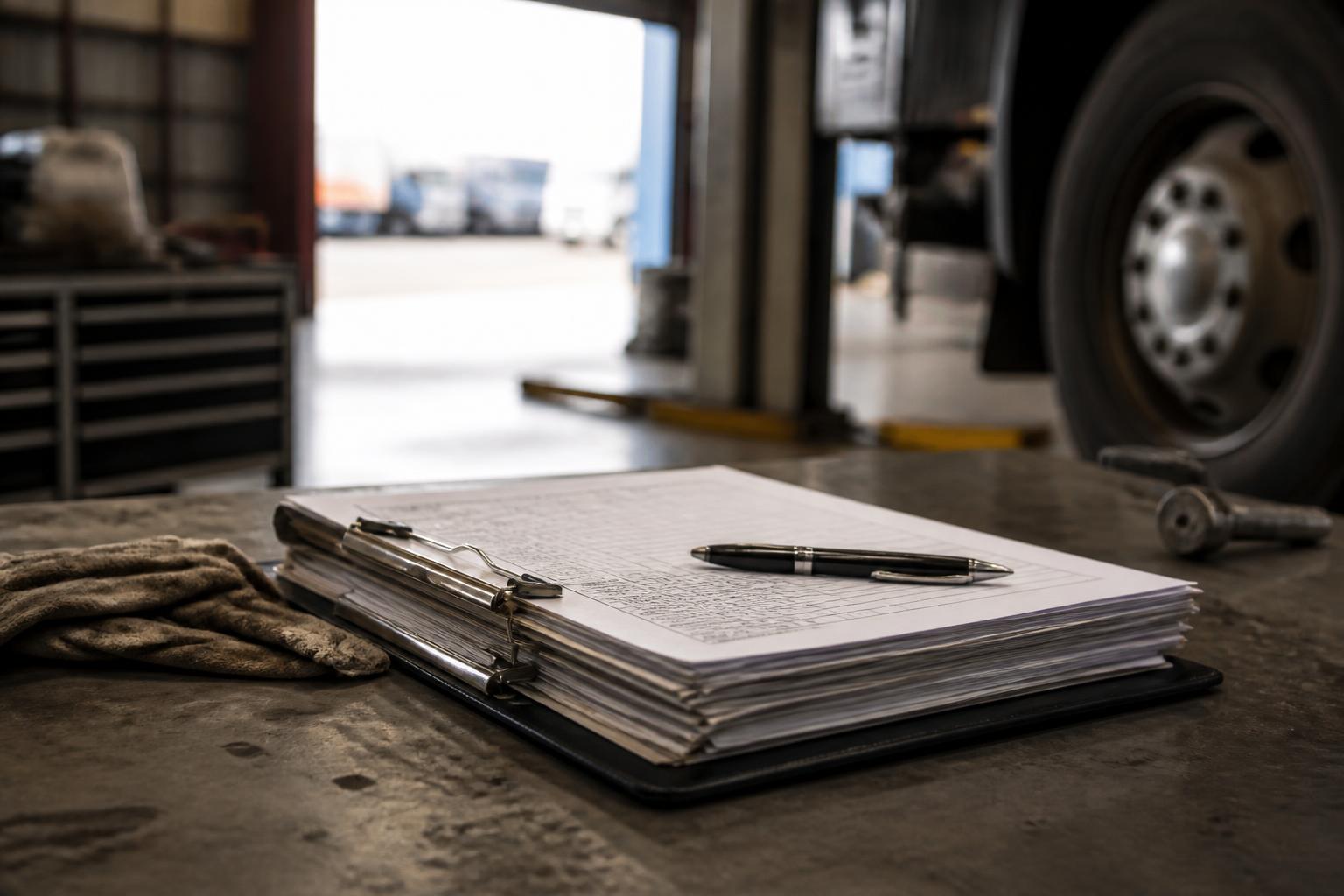
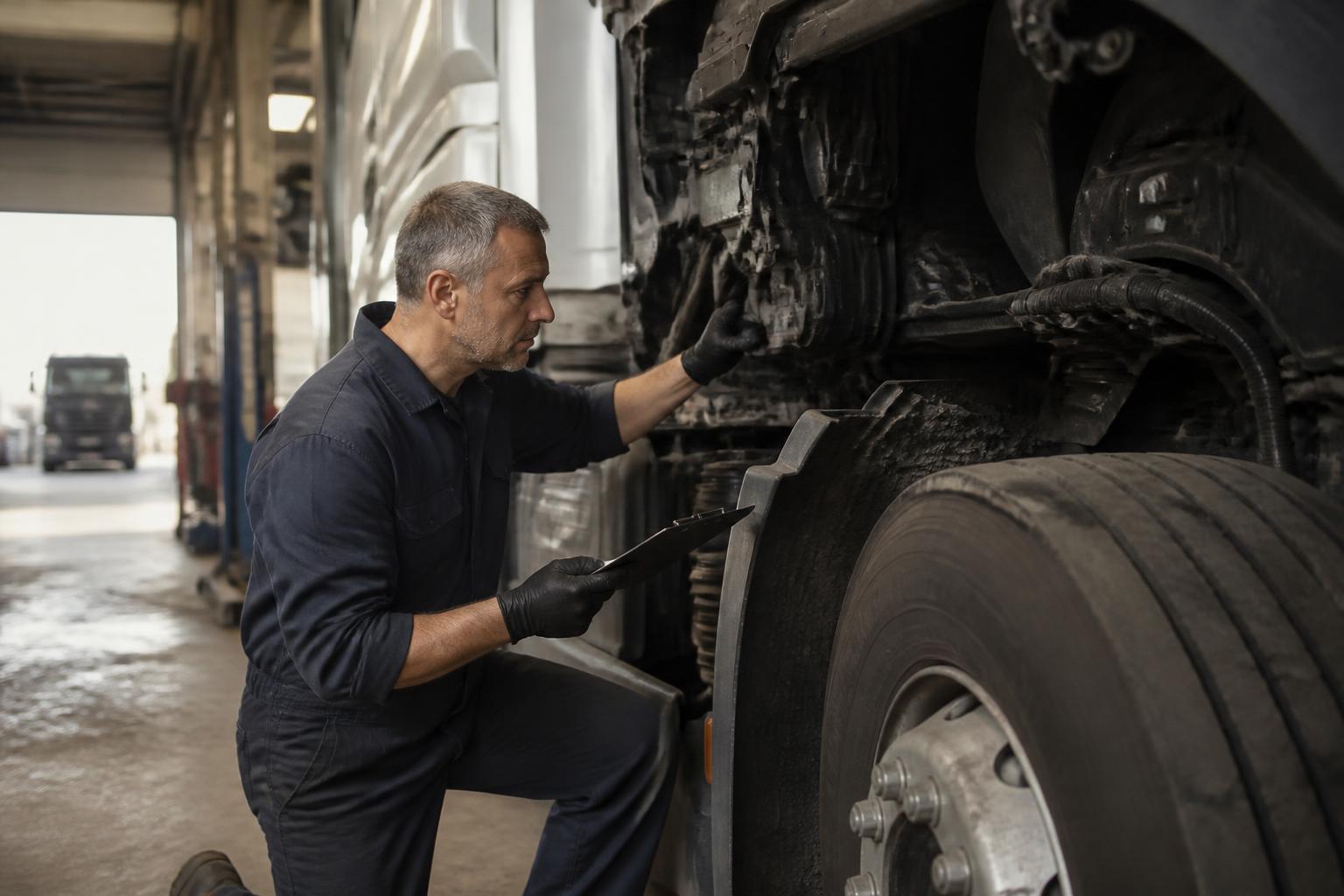
Repair authorisation goes wrong when the workshop finds a defect, starts pulling parts off, and the approval trail catches up later, if it catches up at all. In a commercial vehicle operation, that is how costs drift, vehicles sit half-stripped in a bay, and arguments start between the workshop, the transport office and the customer. If you want proper control, the rule is simple. No chargeable work starts until somebody with the right authority has approved the job, the limit and the reason, unless the vehicle is being made safe.
That is the practical answer to how to manage repair authorisation in a commercial vehicle workshop. Put the decision points in the job flow, not in somebody's memory. Record what was found, what was quoted, who approved it, what changed, and whether the vehicle can return to service. If you do that consistently, you protect cost, uptime and roadworthiness at the same time.
Why repair authorisation breaks down
Most failures are not dramatic. They are ordinary workshop habits that stop working once you have enough vehicles, enough drivers and enough jobs running at once.
The first problem is vague job intake. A vehicle arrives with "check brakes" or "look at warning light" on the worksheet. The fitter inspects it, finds worn pads, damaged wiring and a tyre close to legal limit, but nobody has agreed what can be done without further approval. The workshop assumes the operator wants the vehicle back on the road quickly. The operator assumes they will be called before anything beyond the original complaint is touched.
The second is split records. One version sits on a wallboard, another in a diary, another in the transport manager's phone, and the invoice gets built from whatever the workshop can remember at the end. That is where repair history becomes unreliable. It also makes it harder to defend maintenance decisions if DVSA asks for evidence, or if a Traffic Commissioner ever looks at how defects are controlled under the O-licence.
The third is no clear threshold for approval. If every extra bulb, clamp and sensor needs a phone call, the workshop spends half the day chasing. If nothing needs approval until the invoice lands, the costs drift. The answer is not "better communication" in the abstract. It is specific authority levels by value, by vehicle status and by defect type.
The fourth is poor handling of off-road decisions. A vehicle comes in for a PMI or preventative maintenance inspection, a serious defect is found, and the workshop carries on as if it is only a pricing issue. It is not. Once the defect affects roadworthiness, the first decision is whether the vehicle is fit to leave, not whether the customer likes the estimate.
The fifth is added work discovered after strip-down. This is common with brakes, hubs, suspension, emissions faults and wiring repairs. The original estimate may have been reasonable based on what could be seen. Once dismantled, further defects appear. If your process does not separate "initial approval" from "supplementary approval", the workshop either stops dead waiting for a decision, or carries on and hopes the customer accepts the extra cost later.
The risks are obvious on the floor. Bays are blocked. Parts are ordered twice. Drivers are promised vehicles that are not ready. Transport plans get built around assumptions. Less obvious, but just as serious, is the compliance risk. Poor authorisation control leads to poor records, and poor records make it harder to show proper maintenance planning, defect rectification and roadworthiness management. That matters for OCRS, for MOT preparation, and for any discussion with DVSA about whether vehicles are being kept fit for service.
What a workable authorisation process looks like
A workable process starts before the fitter picks up a spanner.
First, create the job with a clear trigger. That might be a driver defect report, a PMI outcome, a roadside breakdown, a tachograph or warning light issue, MOT preparation, or a defect spotted during other work. The trigger matters because it sets the urgency and the likely approval path.
Second, inspect and classify the defect. The fitter or technician records what has been found, the likely cause if known, the parts and labour expected, and the vehicle status. In practice, we use three simple statuses.
- Safe to continue until booked repair
- Repair required before return to service
- Stop, unroadworthy
That status must be visible to the workshop and the transport office at the same time. If the workshop says the vehicle is off the road but the planner still has it allocated tomorrow, the process has already failed. This is why a one set of records for workshop and transport office matters so much.
Third, produce an estimate before work starts. Not a rough verbal number. A proper estimate with labour, parts, sublet if needed, and any known contingencies. If the defect is diagnostic and the full repair cannot yet be priced, authorise the diagnostic stage separately. That stops the workshop carrying out two hours of fault finding and a partial repair under one vague approval.
Fourth, send the approval request to the right person. That might be the fleet owner, transport manager, workshop controller, contract maintenance customer, or duty manager, depending on the account and the value. The request should show the defect, the estimate, the vehicle status and the consequence of delay. "Vehicle VOR, front brake chamber leaking, cannot return to service" gets a faster and better decision than "needs brake work".
Fifth, record the decision. Approved, declined, deferred, or approved up to a stated limit. Include the name, date, time and channel. Phone approvals are common, but they still need writing up immediately. "Approved by J Smith at 10:42 by phone, up to £850 plus VAT" is usable. "Spoke to John" is not.
Sixth, carry out the work exactly against the approval. If the job changes, stop and raise a supplementary approval. Do not bury extra labour in the final invoice and hope nobody notices. That habit destroys trust and makes every future approval slower.
Seventh, sign off the repair with the rectification details, any parts replaced, any outstanding advisories, and the roadworthiness decision. If the vehicle is returned to service, say who released it and when. If it remains off the road, say why and what is still required.
Eighth, feed the outcome back into maintenance planning. If the repair affects the next PMI date, inspection schedule, tyre plan, brake monitoring or repeat defect tracking, update it there and then. We covered that point in more detail in keeping maintenance plans right when vehicles go off the road.
That is the full loop. It is not glamorous, but it works.
What must be recorded on every approval
Every approval needs enough detail that somebody else can understand the decision later without relying on memory.
At minimum, record:
- Vehicle registration and fleet number
- Trailer number if relevant
- Customer or operating entity
- Job number
- Date and time defect found
- Who found it
- Source of defect, driver report, PMI, preventative maintenance inspection, MOT prep, breakdown, roadside inspection, workshop observation
- Defect description in plain language
- Vehicle status, serviceable, repair before use, unroadworthy
- Estimate amount
- Estimated labour hours
- Parts required
- Subcontract or specialist work if needed
- Whether the estimate is fixed, provisional, or diagnostic only
- Consequence of delay, VOR, legal risk, booking impact, missed test, etc
- Name and role of approver
- Date and time approved
- Approval limit
- Any conditions, such as "replace pads and discs only" or "call back if caliper also required"
Once the job is complete, add:
- Actual labour
- Actual parts used
- Any variance from estimate
- Supplementary approvals with their own date, time and approver
- Rectification carried out
- Whether removed parts were retained or photographed
- Release decision and by whom
- Return to service date and time
If you subcontract work, such as injector coding, specialist welding, tyre call-out or body repair, record that approval separately as well. The workshop still owns the audit trail even when the spanners are in somebody else's hands.
This level of detail is not bureaucracy for its own sake. It is what lets you answer basic questions properly. Why did this repair cost more than expected? Why was the vehicle off the road for two days? Why was this defect deferred? Why has the same unit had three EBS wiring repairs in six months? If your records cannot answer those questions, you do not really control the workshop. For that side of it, our piece on how to spot repeat lorry repairs before they cost you is worth a read.
How to handle safety-critical work and extra findings
Safety-critical work needs a different tone and a different speed.
If a defect makes the vehicle unroadworthy, the workshop should mark it off road immediately. That includes the obvious cases, serious brake defects, steering play beyond limit, structural issues, severe tyre damage, insecure wheels, and anything else that means the vehicle should not return to the road. The exact defect thresholds depend on the issue, and the formal standards used in annual test and enforcement are not a substitute for workshop judgement, but the principle is simple. If in doubt, do not release it.
The approval conversation then becomes, "Here is what is required to make the vehicle roadworthy," not, "Would you like us to go ahead?" The operator can still decide whether to repair, move the vehicle by recovery, or dispose of it. What they cannot do is authorise a return to service with a known serious defect because the diary is busy.
In the UK, this matters directly under the O-licence system. The operator is responsible for roadworthiness, even if maintenance is contracted out. That is why a workshop must be willing to say no when somebody wants a vehicle back before it is fit. In EU countries outside the UK, the legal framework is different because there is no O-licence in the same form, but the duty to keep the vehicle roadworthy still exists through national operator and vehicle regulations. The practical workshop rule is the same.
For extra findings after the first estimate, use a formal stop point. The technician records the new defect, the revised parts and labour, and whether the vehicle can stay dismantled safely while awaiting approval. Then the workshop requests supplementary authorisation. Keep the original approval intact and add the extra as a separate decision. That way, you can see later what was known at the start and what emerged during the job.
A common example is brake work. You approve pads and discs on inspection. Once stripped, one caliper is seized and a hose is damaged. That is not "scope creep". It is a legitimate extra finding. But it still needs recording and approval before cost is added, unless the repair is essential to reassemble safely and the customer has already agreed a standing authority for safety-critical additions up to a stated limit.
Photos help here, especially on remote approvals. So do short technician notes in plain English. Not essays. Just enough to show what changed.
Who should be allowed to approve repairs
Too many businesses make one person approve everything. It feels controlled. It is not. It creates delay, missed calls and poor decisions made in a rush at 5:30pm.
Set approval levels by role, value and vehicle status.
For example:
- Workshop controller can approve consumables and minor additions up to a low limit
- Transport manager can approve routine repairs up to a higher limit
- Fleet owner or director approves major work, repeat high-cost repairs, and discretionary spend on older vehicles
- Duty manager can approve out-of-hours safety-critical work to return a vehicle to service
- No one below a named level can override an unroadworthy decision
The exact figures depend on your fleet, contract structure and appetite for control, but the principle does not change. Small routine decisions should be fast. Big or strategic decisions should be deliberate.
We also recommend separate rules for vehicle status:
- In service and safe, normal value thresholds apply
- VOR but repairable, accelerated response times apply
- Unroadworthy, safety decision first, cost decision second
For third-party workshop customers, agree the approvers in writing when the account is set up. Names, roles, phone numbers, email addresses and out-of-hours contacts. If the named approver is on holiday, there must be a substitute. Otherwise every urgent job turns into a chase.
How to keep authorisation moving without chasing all day
This is mostly about discipline.
First, agree pre-authorised limits. If every job under a sensible threshold still needs a call, the process will clog. Give the workshop authority to proceed with routine items up to an agreed amount, provided the defect is documented and the work is within policy.
Second, use clear statuses that everyone understands. Waiting for estimate. Awaiting approval. Approved. In progress. Stopped for extra findings. Completed. Off road. Returned to service. If those statuses are visible live, the workshop spends less time asking where things stand. We built our own systems that way because that is what keeps bays turning in a real HGV workshop, not because it looks good in a demo. If you are weighing up systems, our guide to truck workshop software that keeps jobs moving covers what actually matters.
Third, separate diagnosis from repair. A lot of delay comes from trying to approve a full repair before anyone knows what is wrong. Authorise an hour or two of diagnosis, then quote the fix properly.
Fourth, set response expectations. Routine estimate, same day. VOR estimate, within the hour. Safety-critical extra finding, immediate escalation. If there is no expectation, there is always another call to make.
Fifth, stop relying on voicemail and memory. Send approvals in a format that can be read back later. That can be software, email, or even a disciplined message trail, but it must sit against the job record.
Sixth, train fitters and service staff to write defects clearly. Authorisation slows down when the description is weak. "NSF brake issue" gets questions. "NSF brake chamber leaking at clamp, vehicle not roadworthy" gets a decision.
Seventh, match invoice lines to approved work. Disputed invoices usually start much earlier, when the approval record is weak. If the final invoice follows the authorised job and the supplementary approvals exactly, there is far less to argue about.
Finally, review the jobs that went wrong. Not in a meeting for the sake of it. Just look at the ones that sat waiting, overran the estimate, or came back disputed. Most workshops do not need a new policy every month. They need to stop tolerating the same three failure points.
Good repair authorisation is not paperwork bolted onto workshop life. It is part of controlling uptime, cost and roadworthiness. When the process is right, the transport office knows what is happening, the workshop knows what it is allowed to do, and the operator has a record that stands up when somebody asks how maintenance decisions were made. That is the standard we work to in the workshop, and it is why we build software around the job as it actually happens, not as somebody in an office imagines it ought to.
What is repair authorisation in a commercial vehicle workshop?
It is the recorded approval to carry out work, usually against an estimate or defect list. It should show what was approved, by whom, when, and any cost limit or conditions.
Should every repair need customer approval?
Not always individually. Many operators use agreed limits for routine work. But anything outside that limit, or anything that changes cost or vehicle availability materially, should be referred back.
How do you deal with extra defects found during the job?
Stop and assess them. Separate immediate roadworthiness issues from work that can be planned. Update the estimate, contact the authorised person, and record the decision before carrying on where approval is needed.
Who should approve repairs for a fleet vehicle?
Usually a transport manager, fleet engineer, owner or another named person with budget authority. The key point is that the workshop knows exactly who can approve and up to what value.
What records should be kept for repair authorisation?
Keep the estimate, defect notes, approval message or call record, approved value, any revised approval, parts and labour used, and the final job outcome linked to the vehicle file.